Iron for Female Runners (2026): Why You’re Probably Low and How to Fix It
Table of Contents
Iron for female runners is one of the most common, most underdiagnosed, and most practically correctable nutritional problems in endurance sport. If your easy runs feel harder than they used to, your heart rate runs high, you can’t seem to recover between sessions, and your legs feel heavy before you’ve even warmed up — iron deficiency is one of the first things worth ruling out.
Iron doesn’t have the performance cachet of creatine or the recovery appeal of magnesium. But inadequate iron status is one of the clearest reasons why training stops responding the way it should.
The numbers are striking. Research consistently shows that iron deficiency affects 15–35% of female athletes compared to just 3–11% of males — and among female runners specifically, the prevalence is higher still. A study of recreational marathon runners found iron depletion in 28% of women but under 2% of men competing in the same race. And critically, the performance impact begins well before full anaemia develops. The stage most athletes are never told about — iron deficiency without anaemia — is where most of the damage happens.
This article covers why female runners face disproportionate iron risk, what the three stages of iron deficiency actually mean for your training, what the research shows about supplementation and performance, and which certified products are worth taking.
This article is for informational purposes only and does not constitute medical or nutritional advice. Always consult a registered dietitian or healthcare provider before starting any supplement regimen. Do not supplement with iron without first confirming deficiency through blood testing — excess iron carries its own health risks.
What iron does in the body — and why runners need more of it
Iron’s most important role is one you already know: it is the core component of haemoglobin, the protein in red blood cells that binds oxygen in the lungs and delivers it to working muscle. Every time you run, your muscles demand oxygen at a rate far beyond resting levels, and haemoglobin is the transport system that meets that demand. Compromise haemoglobin — through insufficient iron — and your aerobic capacity drops directly.
But iron’s role goes beyond red blood cells. It is also a key component of myoglobin (the oxygen-storage protein in muscle tissue), a required cofactor for the mitochondrial enzymes that produce ATP during aerobic exercise, and essential for a number of cognitive and immune functions that matter for athletes in sustained training blocks.
For runners, several of these roles converge in ways that create specific vulnerability:
Aerobic capacity. VO2max — the gold standard measure of aerobic fitness — is directly dependent on the oxygen-carrying capacity of your blood. Iron deficiency reduces haemoglobin concentration, which reduces oxygen delivery per litre of blood pumped, which reduces the maximum power your aerobic system can sustain. A 2024 systematic review of 23 studies in female athletes found that iron deficiency reduces endurance performance by 3–4% on average — a meaningful margin at any level of competition, and noticeable in training even for recreational runners.
Mitochondrial function. Even before haemoglobin is significantly affected, iron depletion impairs the iron-containing enzymes involved in the electron transport chain — the core machinery of aerobic energy production inside muscle mitochondria. This is why iron-depleted athletes often report a disproportionate sense of effort and fatigue even at paces that should feel manageable. The aerobic system is working at a mechanical disadvantage even when blood counts look relatively normal.
Cognitive performance and motivation. Iron is required for the synthesis of dopamine and other neurotransmitters involved in motivation, focus, and mood. Iron-deficient athletes frequently report low motivation to train, difficulty concentrating, and a flat, unmotivated feeling that doesn’t track with actual training load. This is not psychological — it has a physiological basis in iron’s role in brain chemistry.
Immune function. Iron is required for normal immune cell activity. Low iron status is associated with increased susceptibility to illness, which in athletes translates to missed training days, disrupted build phases, and interrupted progression.
Why iron for female runners is a bigger problem than it is for men
Iron deficiency in athletes is not equally distributed. Female runners sit at the intersection of multiple risk factors that stack on top of one another in ways that make adequate iron status genuinely difficult to maintain without active attention.
Menstrual blood loss. This is the single largest contributor to the iron gap between female and male athletes. Each menstrual cycle involves blood loss averaging 30–80 mL — and each mL of blood contains approximately 0.5 mg of iron. For women with heavier periods, monthly iron losses through menstruation alone can amount to 40–60 mg or more — a significant deficit that dietary iron must continuously offset. The RDA for iron for women of reproductive age is 18 mg/day compared to just 8 mg/day for men, precisely because of menstrual losses.
Footstrike haemolysis. Running creates a specific mechanical problem that other sports do not: the repeated impact of foot on ground physically ruptures red blood cells in the capillaries of the foot. With each stride, a small number of red blood cells are destroyed — and with enough training volume, this adds up to a meaningful increase in iron turnover. Research confirms that footstrike haemolysis increases iron requirements in distance runners beyond what is seen even in other endurance athletes. Harder running surfaces and poor shoe cushioning make this worse.
Hepcidin and post-exercise absorption suppression. Exercise triggers the release of interleukin-6, an inflammatory signal that stimulates the liver to produce hepcidin — a hormone that directly blocks iron absorption in the gut and iron release from stores. Hepcidin peaks approximately 3–6 hours after exercise and remains elevated for several hours. This means that if you eat your highest-iron meal of the day within a few hours of training — which many athletes do — your gut is actively working against iron absorption at that moment. The more frequently you train, the more consistently hepcidin suppresses your absorption window.
Low Energy Availability (LEA). Female runners are at elevated risk of unintentionally under-fuelling relative to training demands — a state formally described as Low Energy Availability, and at its most serious, part of the Female Athlete Triad (now reframed as Relative Energy Deficiency in Sport, or REDs). In energy-deficient states, hepcidin response to exercise is amplified and iron absorption is further suppressed. Athletes eating less than their training requires are therefore doubly compromised: they’re taking in less dietary iron while simultaneously absorbing a smaller proportion of what they do eat. [INTERNAL LINK PENDING — REDs/Female Athlete Triad article]
Sweat losses. Iron is lost in small amounts through sweat. While this is a minor contributor relative to menstrual losses and footstrike haemolysis, it is non-negligible for high-volume runners training in warm conditions — particularly during summer training blocks.
Dietary patterns. Female runners are disproportionately likely to follow dietary patterns that reduce iron bioavailability: higher plant food consumption (non-haem iron is significantly less bioavailable than haem iron), caloric restriction, avoidance of red meat, high fibre intake, and frequent coffee or tea consumption (both of which inhibit iron absorption when consumed near meals). None of these are inherently problematic — but in combination with the factors above, they create a persistent deficit that many runners carry without realising.
The three stages of iron deficiency — and why stage 2 is the one that matters most
Most athletes who are told they’re “not anaemic” assume they have no iron problem. This is one of the most consequential misunderstandings in sports nutrition, because anaemia — the final and most severe stage of iron deficiency — is the last thing to develop, not the first.
Iron deficiency progresses through three distinct stages:
Stage 1 — Iron depletion. Iron stores (measured by serum ferritin) are depleted, but circulating iron and haemoglobin remain normal. At this stage, most standard blood panels will read as unremarkable. Athletes may feel slightly more fatigued than usual, but symptoms are often subtle and easy to dismiss. Ferritin below 20 ng/mL is the typical threshold for Stage 1 in athletes, though many sports medicine practitioners use a higher cutoff of 30–35 ng/mL for female athletes in heavy training.
Stage 2 — Iron deficiency without anaemia (IDNA). Iron stores are exhausted and iron delivery to tissues is now compromised, but haemoglobin has not yet dropped below the clinical threshold for anaemia. This is the stage at which athletic performance is significantly impaired — and the stage that a standard haemoglobin-only test misses entirely. Mitochondrial enzyme activity declines. Aerobic efficiency drops. Training feels harder and recovery feels slower. Yet a GP looking only at haemoglobin will often say everything looks fine. This is why many female runners train for months or years in a sub-optimal state without a clear explanation.
Stage 3 — Iron deficiency anaemia. Haemoglobin has fallen below the clinical threshold (typically <12 g/dL in women). Red blood cell production is now directly impaired, oxygen-carrying capacity is substantially reduced, and symptoms — extreme fatigue, breathlessness, pallor, palpitations, cold intolerance — are hard to miss. This is the stage most commonly treated, but it is the stage that should have been caught and corrected much earlier.
The practical implication: if you are a female runner experiencing unexplained fatigue, reduced performance, or elevated effort at familiar paces, request a full iron panel — not just a haemoglobin check. You want serum ferritin, transferrin saturation, and ideally TIBC (total iron binding capacity). Ferritin is the most practically useful marker for athletes.
What ferritin level should you aim for? Standard laboratory reference ranges for ferritin typically flag anything above 12–15 ng/mL as “normal.” Sports medicine consensus has moved considerably above this. For female athletes in training, most exercise physiologists now recommend:
- >35 ng/mL as the minimum acceptable level during training
- >50 ng/mL as preferable for sustained training blocks
- >50–70 ng/mL before altitude training, where iron requirements increase substantially
Ferritin in the 12–30 ng/mL range — technically “normal” by lab reference ranges — is functionally suboptimal for a runner in regular training.
What the research actually shows about iron supplementation and performance
The evidence base here is unusually strong by supplement standards — particularly because iron deficiency is a definable, testable state, which allows researchers to design studies with clear inclusion criteria and measurable outcomes.
Performance impact of iron deficiency: clear and quantifiable
A 2024 systematic review covering 23 studies and 669 female athletes found that iron deficiency reduces endurance performance by 3–4%. This sounds modest in percentage terms — but in practice, a 3–4% reduction in aerobic capacity translates to roughly 3–5 minutes slower in a half marathon, significant deterioration in interval training quality, and a chronic ceiling on adaptation that no amount of additional training volume will overcome. More strikingly, the same review found that correcting iron deficiency through supplementation improved endurance performance by 2–20% depending on the severity of deficiency at baseline and the duration of supplementation — one of the largest effect sizes in the sports supplement literature.
Stage 2 deficiency impairs performance even without anaemia
This point deserves emphasis because it is so frequently missed in clinical practice. Multiple studies have confirmed that iron depletion without anaemia — Stage 2 — is sufficient to impair athletic performance. A study of female collegiate rowers found significant reductions in time-to-exhaustion and VO2max at ferritin levels that a standard medical review would not flag as requiring treatment. The mechanism is the impairment of mitochondrial enzyme activity independent of haemoglobin levels. Athletes do not need to be anaemic for iron status to be limiting their aerobic capacity.
Supplementation timeline: what to expect
Iron supplementation does not produce immediate results. Red blood cell turnover takes weeks, and rebuilding ferritin stores takes longer still. General timelines based on research:
- Ferritin begins to rise: 2–4 weeks of consistent supplementation
- Haemoglobin improves (if low): 4–8 weeks
- Performance and subjective energy improve: 4–12 weeks, depending on baseline status and dose
- Full store replenishment: 3–6 months for significantly depleted athletes
A 2024 study in NCAA Division 1 female athletes found that both daily and three-times-weekly dosing with ferrous bisglycinate were effective for treating non-anaemic iron deficiency, with the less-frequent dosing producing comparable ferritin increases with better GI tolerance — a finding relevant for athletes who struggle with daily iron supplementation.
The hepcidin timing problem — and how to work around it
Because hepcidin suppresses iron absorption for several hours after exercise, the timing of iron supplementation matters more than many athletes realise. Research suggests the optimal window is on waking, before training — or alternatively on rest days and on training days where the gap between supplementation and exercise is at least 3–4 hours. Taking iron immediately after a run, or in the hours following training, reduces absorption efficiency significantly. This is a meaningful practical detail that can affect how quickly supplementation works.
Signs you might be iron deficient
Many of the symptoms of iron deficiency in female runners — particularly at Stages 1 and 2 — are easy to attribute to overtraining, under-recovery, stress, or simply having a bad run of sessions. This is precisely why deficiency persists for so long in so many athletes. Signs to pay attention to:
- Persistent fatigue that sleep doesn’t fully resolve
- Runs that feel harder than your pace or heart rate should suggest
- Heart rate running higher than usual at familiar efforts
- Legs feeling heavy early in runs, before you’ve warmed up
- Unusually slow recovery between hard sessions
- Brain fog, difficulty concentrating, low motivation to train
- Pallor — pale inner lower eyelids, pale nail beds
- Cold intolerance, particularly in hands and feet
- Frequent minor illnesses or slow recovery from illness
- Brittle nails, unusual hair loss
- Worsening performance despite consistent training and good sleep
Important: these symptoms overlap significantly with overtraining syndrome, thyroid issues, vitamin D deficiency, and other conditions. A blood test is the only way to confirm iron status. If in doubt, get tested before supplementing — iron overload is a genuine concern, particularly in athletes who supplement without confirmed deficiency.
What to look for when buying an iron supplement
1. Form matters — and bisglycinate is the clear winner
Unlike some nutrients where form differences are modest, iron form has a substantial impact on both absorption and tolerability. The form determines how much iron actually reaches your tissues and how your gut responds.
Ferrous bisglycinate (iron bisglycinate chelate / Ferrochel®): The best form for most athletes and the one used in all three products recommended below. Iron is bound with two glycine molecules, creating a chelated compound that is absorbed via a different intestinal pathway to standard iron salts — one that is less affected by dietary inhibitors like phytates, polyphenols, and calcium. Bioavailability is significantly higher than ferrous sulfate, and GI side effects (constipation, nausea, stomach cramps) are substantially reduced. This matters for athlete compliance: the most effective supplement is the one you actually keep taking.
Ferrous sulfate: The standard clinical form and what most GPs prescribe. Effective at raising haemoglobin but notorious for GI side effects — constipation, nausea, and stomach pain that lead many patients to stop taking it. Cheap and widely available. If you’re self-supplementing for confirmed deficiency, bisglycinate is the better choice. If your doctor has prescribed ferrous sulfate for diagnosed anaemia, follow their guidance.
Ferrous gluconate and ferrous fumarate: Intermediate options — better tolerated than sulfate but not as bioavailable or well-tolerated as bisglycinate. Found in many general pharmacy supplements.
Forms to avoid: Ferric iron forms (ferric oxide, ferric sulfate) have poor bioavailability and are not recommended for supplementation.
2. Third-party certification: the non-negotiable standard
As with all supplements on this site, every product we recommend carries independent third-party certification. For iron specifically, this matters for an additional reason: iron is a mineral that can interact with other compounds in ways that affect potency, and label accuracy matters when dosing needs to be precise.
The two certifications we trust:
- NSF Certified for Sport — tests for 290+ banned substances, verifies label accuracy, recognised by USADA, NFL, NBA, and Olympic sport.
- Informed Sport — tests every batch for banned substances, widely respected across professional sport.
One product on this list (MegaFood Blood Builder) carries NSF certification but not specifically NSF Certified for Sport. This is noted transparently in the write-up below.
3. Elemental iron content vs. compound weight
Always check the elemental iron per serving, not the compound weight. A label reading “150 mg ferrous bisglycinate” does not mean 150 mg of iron — the glycine molecules make up a significant portion of the compound weight. Look for elemental iron per serving clearly stated on the label. Typical effective doses for supplementation in athletes with confirmed deficiency: 25–100 mg elemental iron daily, depending on severity.
4. Co-factors: vitamin C matters, B12 and folate are a bonus
Vitamin C (ascorbic acid) enhances iron absorption by reducing ferric to ferrous iron in the gut. If your supplement doesn’t include vitamin C, take it alongside a glass of orange juice or a vitamin C supplement. Avoid coffee, tea, dairy, and high-calcium foods within 1–2 hours of taking iron — these significantly reduce absorption. B12 and folate support red blood cell production and are complementary to iron in addressing fatigue — useful additions in a formula.
Quick comparison: best iron supplements for female runners
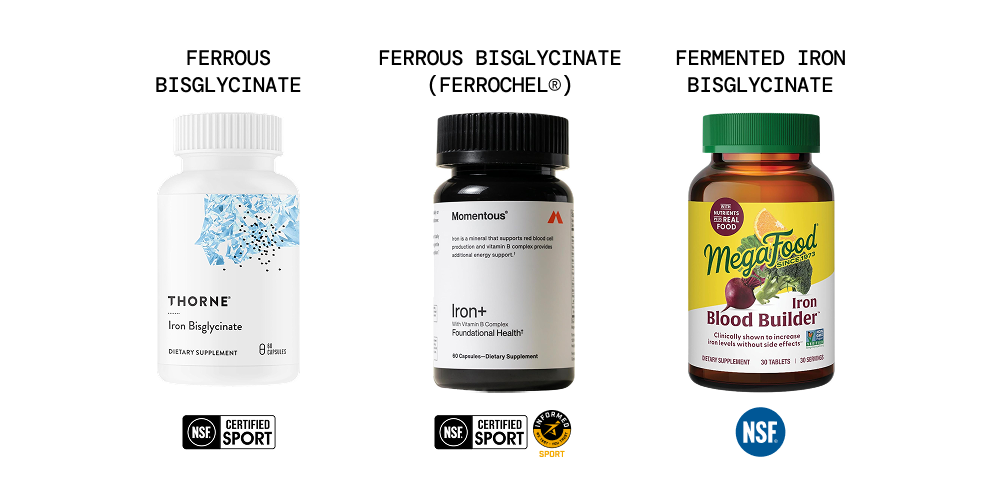
| Product | Form | Elemental Iron | Certification | Best for | Price/serving |
|---|---|---|---|---|---|
| Thorne Iron Bisglycinate | Ferrous bisglycinate | 25 mg | NSF Certified for Sport | Best overall | ~$0.50 |
| Momentous Iron+ with Vitamin C & B Complex | Ferrous bisglycinate (Ferrochel®) | 18 mg | NSF + Informed Sport | Drug-tested athletes | ~$0.83 |
| MegaFood Blood Builder | Fermented iron bisglycinate | 26 mg | NSF (general) | GI-sensitive athletes | ~$0.55 |
Our picks: best iron supplements for female runners
Every product on this list has been selected on the basis of form quality, certification standard, label transparency, and practical suitability for female athletes. Products lacking independent third-party certification were not considered.
🥇 Best overall — Thorne Iron Bisglycinate
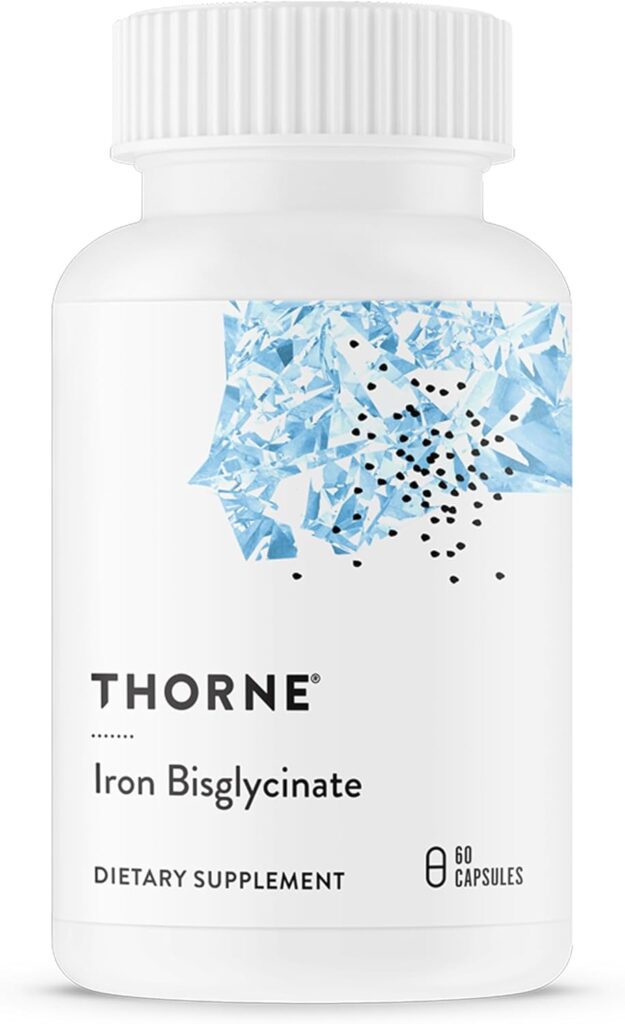
Dose per serving: 25 mg elemental iron
Certification: NSF Certified for Sport
Price per serving: ~$0.50
Form: Ferrous bisglycinate
Thorne is the default recommendation here for the same reason it leads our creatine and magnesium lists: NSF Certified for Sport, a clean single-ingredient formula, and a manufacturing quality standard trusted by professional sports organisations across multiple disciplines.
The form is ferrous bisglycinate — the same chelated iron used in clinical research on athlete populations, and the most bioavailable, best-tolerated oral iron form available. At 25 mg elemental iron per capsule, it sits at the lower end of typical therapeutic doses, which makes it well-suited for maintenance supplementation and for athletes with mild-to-moderate deficiency who want to dose conservatively. For more significant deficiency, multiple capsules can be taken as directed by a healthcare provider.
One capsule per day is the standard recommendation. Thorne’s manufacturing is GMP-compliant and audited, and their products are formulated without unnecessary fillers, artificial colours, or common allergens.
What we like: NSF Certified for Sport, ferrous bisglycinate for maximum absorption and minimal GI side effects, clean formula, trusted brand used at elite sport level, competitive price per serving.
What to be aware of: At 25 mg elemental iron, it’s a conservative dose. Athletes with significant depletion and a confirmed need for higher doses should consult a healthcare provider before exceeding one capsule daily. Does not include vitamin C — take alongside a vitamin C source or pair with a glass of orange juice.
Best for: Female runners who want a reliable, certified daily iron supplement for confirmed deficiency or maintenance — particularly those who are drug-tested or working with a sports medicine practitioner.
🏆 Best for drug-tested athletes — Momentous Iron+ with Vitamin C & B Complex
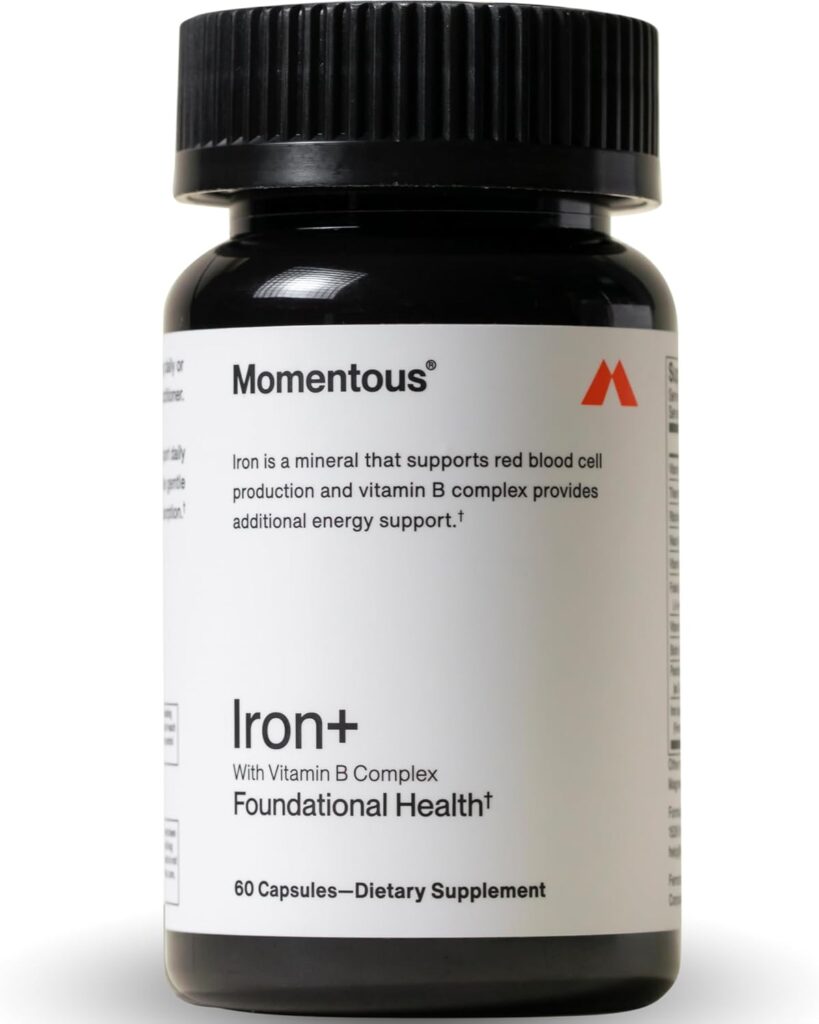
Dose per serving: 18 mg elemental iron
Certification: NSF Certified for Sport + Informed Sport
Price per serving: ~$0.83
Form: Ferrous bisglycinate (Ferrochel®) with vitamin C and B complex
Momentous earns the premium slot on every list on this site by virtue of its dual certification standard — the only brand in this comparison independently verified by both NSF Certified for Sport and Informed Sport simultaneously. For competitive female runners in drug-tested sport, this is the safest iron option available. See our full guide to the best protein powders for female athletes →
What sets this formula apart beyond certification is what else is in the capsule. Momentous Iron+ combines Ferrochel® — the branded, most rigorously studied form of ferrous bisglycinate chelate — with vitamin C and a B complex. Vitamin C enhances iron absorption directly at the gut level; B vitamins (particularly B12 and B6) support red blood cell production and energy metabolism. Rather than taking iron with a separate glass of orange juice and hoping for the best, the co-factors are already dosed and present. This is the most nutritionally complete iron supplement on this list.
The Ferrochel® form from Albion Minerals is the one used in the majority of clinical research on bisglycinate absorption. At 18 mg elemental iron per serving, the dose is positioned for maintenance supplementation and mild deficiency. For athletes with significant depletion, higher doses under healthcare guidance may be needed, and this formula can be doubled if required.
The Momentous premium reflects the dual-certification overhead and the more complex formulation. For a recreational runner without drug testing requirements, Thorne at a lower price point is equally sound from a quality standpoint. For anyone competing under WADA, USADA, or sport-specific anti-doping rules, the dual certification justifies the cost.
What we like: Dual NSF + Informed Sport certification (the highest standard available), Ferrochel® form, built-in vitamin C and B complex for absorption and red blood cell support, most complete formula on this list, trusted by professional and Olympic athletes.
What to be aware of: Most expensive per serving on this list. At 18 mg elemental iron, may not be sufficient as a sole supplement for athletes with significant depletion — check with a healthcare provider if ferritin is very low.
Best for: Competitive female runners in drug-tested sport who want the highest certification standard and prefer an all-in-one iron + co-factor formula.
🌱 Best for GI sensitivity — MegaFood Blood Builder
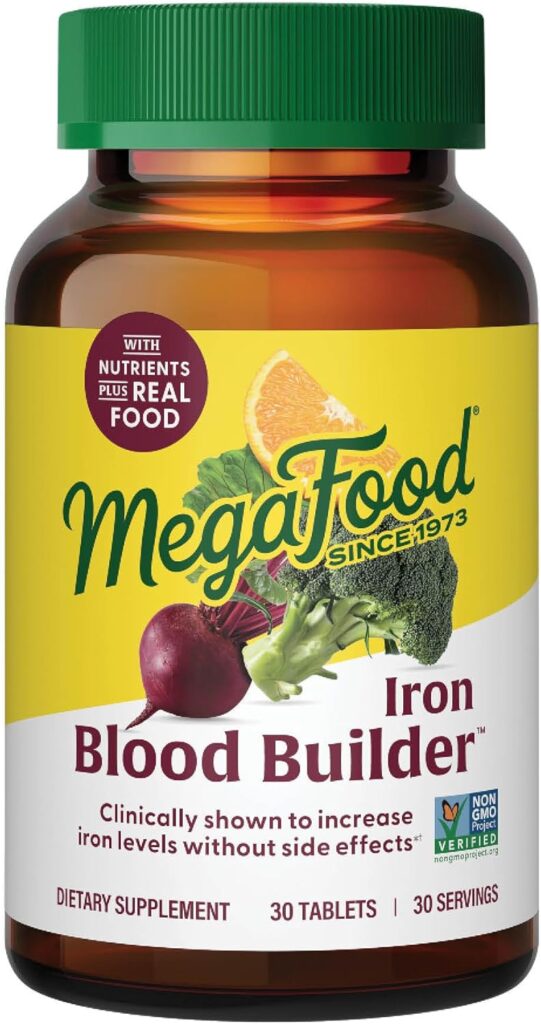
Dose per serving: 26 mg elemental iron
Certification: NSF (general) — not NSF Certified for Sport
Price per serving: ~$0.55
Form: Fermented iron bisglycinate
A note upfront on certification: MegaFood Blood Builder is NSF certified for general quality and label accuracy, and has been tested for 125+ pesticides and herbicides. It does not carry NSF Certified for Sport or Informed Sport certification, meaning it has not been screened for the full range of banned substances relevant to drug-tested athletes. We are including it here because it fills a genuinely distinct role — and we believe in being transparent rather than pretending the limitation doesn’t exist.
For female runners who are not competing in drug-tested sport and who have struggled with GI side effects from iron supplements, Blood Builder is worth knowing about. Its formula uses a fermented form of iron bisglycinate — a process that further improves tolerability compared to standard bisglycinate — and pairs it with vitamin C (from organic orange), vitamin B12, and folate, which collectively support red blood cell production beyond iron alone. An 8-week clinical trial confirmed the formula increases iron levels without causing nausea or constipation. It can be taken on an empty stomach, which is practically useful for athletes whose routine makes food-paired timing difficult.
At 26 mg elemental iron per tablet — the highest on this list — combined with built-in absorption co-factors, it is also the most nutritionally comprehensive option here.
What we like: Best GI tolerance of any option on this list, built-in vitamin C and B12 for absorption and red blood cell support, highest elemental iron dose per serving, clinically studied formula, can be taken on an empty stomach.
What to be aware of: Not NSF Certified for Sport or Informed Sport. Not suitable for drug-tested athletes who need full banned substance screening. Non-standard iron form (fermented bisglycinate) means some label comparison is less straightforward.
Best for: Non-drug-tested female runners with confirmed iron deficiency who have experienced GI side effects from other iron supplements, or those who want a food-based formula with built-in co-factors.
How to take iron: dosing guide for female runners
How much do you need?
The RDA for iron for women of reproductive age is 18 mg/day — already more than double the 8 mg/day recommended for men, reflecting menstrual losses. But for female runners with confirmed deficiency, this is a maintenance target, not a therapeutic dose.
Typical supplementation doses for female athletes with confirmed iron deficiency without anaemia:
- 25–60 mg elemental iron daily for mild-to-moderate deficiency (ferritin 15–35 ng/mL)
- 60–100 mg elemental iron daily for more significant deficiency, under healthcare guidance
- Maintenance dose (18–25 mg/day) once ferritin reaches >50 ng/mL
Do not supplement with iron without confirmed deficiency through blood testing. Unlike most of the supplements on this site, iron carries meaningful risk at excessive doses. Iron overload is associated with oxidative stress, organ damage, and cardiovascular risk over the long term. Supplementing without confirmed need adds iron to a system that may already have adequate stores.
Timing: this matters more for iron than for almost any other supplement
Because exercise triggers hepcidin release which blocks iron absorption for several hours after training:
- Best window: On waking, before training — when hepcidin is at its daily low
- Second best: On rest days, or on training days where you can take iron 3–4+ hours before your session
- Avoid: Within 3 hours after finishing a run — hepcidin is elevated and absorption is suppressed
- Take with: Water and a vitamin C source (orange juice, a vitamin C supplement). Avoid coffee, tea, dairy, and high-calcium foods within 1–2 hours
Every other day dosing: an emerging option
Recent research has shown that alternate-day iron supplementation may actually produce better net absorption than daily dosing in some individuals. The reason: daily iron supplementation keeps hepcidin elevated chronically, which progressively suppresses absorption. Taking iron every other day allows hepcidin to fall between doses, improving the absorption fraction of each dose. This approach is worth discussing with a healthcare provider, particularly if daily iron consistently causes GI discomfort.
How long before you notice a difference?
Expect:
- 2–4 weeks: Ferritin begins to rise on blood testing
- 4–8 weeks: Subjective energy and effort perception may begin to improve
- 8–12 weeks: Meaningful changes in training feel and performance capacity
- 3–6 months: Full store replenishment for significantly depleted athletes
Retest ferritin every 8–12 weeks while supplementing to monitor progress and adjust dose as stores rebuild.
Frequently asked questions
How do I know if I’m iron deficient as a runner?
The only reliable way is a blood test. Request a full iron panel from your GP or sports medicine doctor — ask specifically for serum ferritin, transferrin saturation, and TIBC, not just haemoglobin. A haemoglobin-only test will miss iron deficiency without anaemia (Stage 2), which is where most athletic impairment occurs. If your ferritin is below 35 ng/mL and you are a regularly training female runner, it is worth discussing supplementation with your healthcare provider.
Can iron deficiency cause slow running without feeling tired?
Yes. One of the more confusing presentations of Stage 2 iron deficiency is a disconnect between effort perception and actual pace — where running at what used to feel like an easy effort now triggers a heart rate response more typical of a moderate effort, or where threshold pace has dropped but subjective feel hasn’t obviously changed. This is consistent with iron-related impairment of mitochondrial enzyme function. If your paces are declining without explanation, iron status is worth checking.
Is it safe to take iron supplements every day?
At appropriate doses for confirmed deficiency, daily bisglycinate supplementation is considered safe. The tolerable upper intake level for supplemental iron is 45 mg/day for adults. GI side effects are the most common issue, and bisglycinate is the best-tolerated form for daily use. Do not exceed recommended doses and retest periodically to avoid over-supplementing as stores rebuild. Never supplement daily at high doses without confirmed deficiency.
Can I take iron with magnesium or creatine?
Creatine: no known interaction — both can be taken as part of a daily routine.
Magnesium: there is some evidence that high doses of zinc, calcium, and magnesium can compete with iron for absorption when taken together. The practical guidance is to separate iron supplementation from magnesium by at least 2 hours, or to take iron in the morning and magnesium at night (which also aligns with the optimal timing guidance for both).
Why is my GP telling me my iron is fine when I feel terrible?
Most standard blood panels test haemoglobin, not ferritin. A haemoglobin result in the normal range tells you you’re not anaemic — it does not tell you whether your iron stores are adequate for athletic performance. Sports medicine research uses significantly higher ferritin targets than standard laboratory reference ranges. If you’ve been told your iron is “normal” based on haemoglobin alone, ask specifically for serum ferritin. A result in the 15–30 ng/mL range — normal by standard clinical definitions — is likely suboptimal for a female runner in regular training.
Does running cause iron deficiency or just make existing deficiency worse?
Both. Running increases iron requirements through footstrike haemolysis, sweat losses, and the hepcidin-mediated absorption suppression that follows exercise. If dietary iron is adequate and stores are good, running alone is unlikely to cause deficiency. But in female runners who are already at the lower end of adequate intake — which research suggests is common — the additional demand from training pushes them into deficiency that might not otherwise have developed. The risk is cumulative, which is why ferritin tends to drift lower over training seasons without active dietary attention.
Should I take iron before or after running?
Before, and ideally on waking — this is when hepcidin is at its daily low and absorption is highest. Taking iron after training, or in the 3–6 hours post-exercise window, places supplementation at the point when exercise-induced hepcidin is actively suppressing gut iron absorption. The difference in absorption efficiency between these windows is meaningful enough to affect how quickly supplementation works.
The bottom line
Iron deficiency is the most common nutritional deficiency in female runners, and one of the most practically correctable reasons why training stops responding the way it should. Understanding iron for female runners — what drives it, how to test for it, and how to correct it — is one of the highest-leverage things you can do for your training. The key points:
You don’t need to be anaemic for iron to be limiting your performance. Stage 2 iron deficiency — depleted stores without low haemoglobin — is where most athletic impairment occurs, and it’s the stage a standard haemoglobin test misses. Ferritin below 35 ng/mL in a regularly training female runner is worth taking seriously.
Female runners face a specific stack of risk factors — menstrual losses, footstrike haemolysis, hepcidin suppression after exercise, and the dietary patterns common in this population — that make adequate iron status genuinely harder to maintain than most athletes appreciate.
If you supplement, form and timing matter. Ferrous bisglycinate is the form to use: better absorbed, far better tolerated, and the form used in the clinical research in athlete populations. Take it on waking before training, with a vitamin C source, away from coffee, tea, and dairy.
Thorne Iron Bisglycinate is the standard recommendation: NSF Certified for Sport, ferrous bisglycinate, clean formula, competitive price. For drug-tested athletes, Momentous Iron+ with Vitamin C & B Complex is the premium choice with dual NSF + Informed Sport certification. For athletes with GI sensitivity who are not competing in tested sport, MegaFood Blood Builder is the most comprehensive formula on this list.
Get tested before supplementing. Retest every 8–12 weeks. And if your ferritin comes back in the 15–30 ng/mL range and you’ve been told everything is fine — push back.
Building out the rest of your supplement foundation?
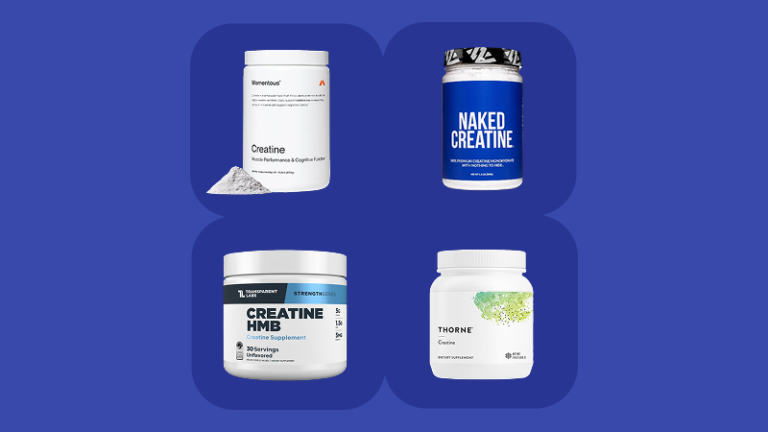
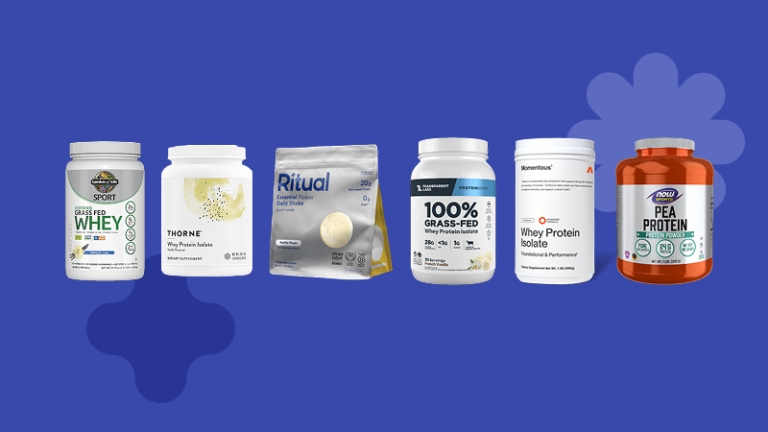
- Best protein powders for female athletes — certified picks and how much you actually need as a runner.
- Creatine for female athletes — why the research is stronger than the headlines suggest, and whether runners benefit.
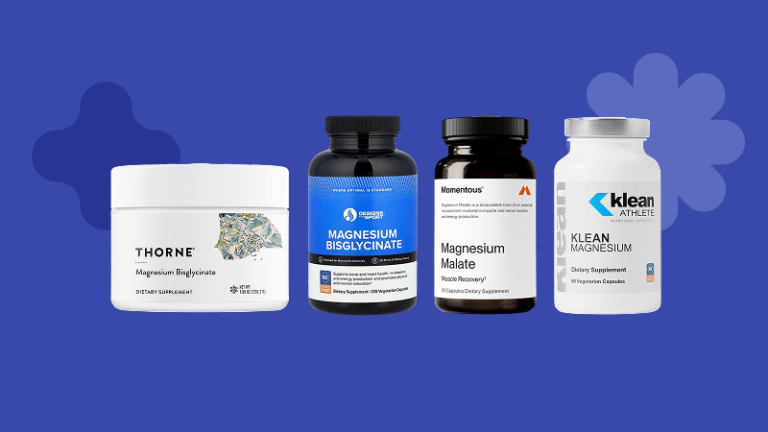
- Magnesium for female athletes — why female athletes are disproportionately deficient, and which form to take.
This article was last reviewed in April 2026. We update our content regularly to reflect new research. If you spot something that needs updating, contact us.
References
- Nolte S, Krüger K, Hollander K, Carlsohn A. (2024). Approaches to prevent iron deficiency in athletes. Dtsch Z Sportmed. 75: 195–202. Read study
- Pengelly M, Pumpa K, Pyne DB, Etxebarria N, et al. (2024). Iron deficiency, supplementation, and sports performance in female athletes: A systematic review. Journal of Sport and Health Science. Read study
- Sims ST, Mackay K, Leabeater A, et al. (2022). High Prevalence of Iron Deficiency Exhibited in Internationally Competitive, Non-Professional Female Endurance Athletes. Int J Environ Res Public Health. 19(24):16606. Read study
- Zoller H, Vogel W. (2004). Iron excess in recreational marathon runners. Zürich marathon iron status study. PubMed. Read study
- Schulte M, et al. (2024). Daily versus three times weekly dosing for treatment of iron deficiency nonanemia in NCAA Division 1 female athletes. PM&R. Read study
- Iron Status and Physical Performance in Athletes. (2023). Life (Basel). PMC10608302. Read study