Best Protein Powder for Female Athletes (2026): What Actually Works
In this article:
Finding the best protein powder for female athletes is harder than it should be — pick up almost any guide online and you’ll notice something: it was written for men.
The research cited is from male subjects. The serving sizes are calibrated for an 80kg body. The recommended brands sponsor male-dominated sports. Even the so-called “women’s versions” are often just regular protein powder in a pink tub — fewer calories, a flower on the label, same formula underneath.
Female athletes deserve better than that. And whether you’re training for your first 5K, hitting the gym three times a week, or competing at a serious level — this guide was written for you.
Here’s what the research actually shows: women who train have distinct protein needs shaped by their physiology, hormonal cycle, and training goals. Studies indicate that female athletes doing high-intensity or intermittent exercise may need up to 1.71 grams of protein per kilogram of body weight per day — at the upper end of, or exceeding, estimates commonly cited for men.¹ Protein powder is one of the most practical and well-studied tools for hitting those targets, especially on heavy training days when whole foods alone don’t quite get you there.
But the supplement industry is notoriously unregulated. Most products are never independently tested. Many contain fillers, undisclosed additives, or contaminants that never appear on the label.
This guide cuts through all of that. We reviewed the best protein powders for female athletes with one lens: what’s actually worth putting in your body. Every product on this list has been independently certified — by NSF Certified for Sport, Informed Sport, or Informed Choice — meaning what’s on the label matches what’s inside.
Here’s what to look for, what to avoid, and which products we recommend.
This article is for informational purposes only and does not constitute medical or nutritional advice. Always consult a registered dietitian or healthcare provider before starting any supplement regimen.
Do female athletes actually need protein powder?
Short answer: most active women don’t get enough protein — and powder is one of the most practical ways to fix that.
The current consensus from the International Society of Sports Nutrition (ISSN) recommends that physically active individuals consume between 1.4 and 2.0 grams of protein per kilogram of body weight per day — significantly more than the general population guideline of 0.8g/kg.⁵ For a 65kg woman who trains regularly, that’s anywhere from 91g to 130g of protein daily.
Hitting that target through food alone is absolutely possible, but it takes real planning. A chicken breast has around 30g. Three eggs give you about 18g. Most women eating a balanced, varied diet land somewhere between 60–80g per day — well below what research suggests active bodies need.
And here’s the part that often gets left out: the research on female athletes specifically points to even higher requirements during intense training phases. A 2017 study using the indicator amino acid oxidation (IAAO) method found that women performing variable-intensity intermittent exercise needed up to 1.71g of protein per kilogram per day — at the upper end of, or exceeding, estimates for men doing the same type of training.¹
What about the “protein makes women bulky” myth?
This one refuses to die, so let’s put it to rest directly. Building significant muscle mass requires years of progressive resistance training, a sustained caloric surplus, and — in many cases — genetic predisposition. Protein powder doesn’t cause bulk. It supports recovery, helps preserve lean muscle during periods of high training load or caloric deficit, and contributes to the hormonal environment your body needs to adapt to exercise.
A 2018 study of female physique athletes found that higher protein intake led to greater gains in lean mass (+2.1kg vs +0.6kg over 8 weeks) compared to a lower-protein diet — with no meaningful difference in body fat.⁴
So do you need a supplement?
Not necessarily. Whole foods should always come first — they bring fibre, micronutrients, and satiety that powder can’t replicate. But protein powder is a genuinely useful tool in specific situations: post-workout when appetite is low, on high-volume training days, during travel or busy stretches when cooking isn’t realistic, or simply when your daily protein is falling short and you need a quick, clean top-up.
Think of it less as a supplement and more as a convenience food with a very good nutrition label.
What to look for in a protein powder for women
Walk into any supplement store — or scroll through Amazon for five minutes — and the number of options is genuinely overwhelming. Here’s how to cut through the noise.
1. Protein type: whey isolate, concentrate, or plant-based?
This is the first decision to make, and it comes down to your diet, digestion, and goals.
Whey protein isolate is the most processed form of whey, with most of the fat and lactose removed. It typically delivers 90%+ protein by weight, digests quickly, and is the easiest on sensitive stomachs. It’s the best all-round choice for most female athletes.
Whey protein concentrate is less processed, retains more fat and lactose, and is generally cheaper. If you tolerate dairy well and are watching your budget, concentrate works fine. If you experience bloating after protein shakes, switching to isolate often solves it.
Plant-based proteins — typically pea, rice, or a blend of both — are the go-to for vegans, those with dairy intolerances, or anyone who simply prefers to avoid animal products. The main thing to check: is it a complete protein? Pea protein alone is low in the amino acid methionine, which is why quality plant proteins either blend multiple sources or add methionine directly.
2. How much protein per serving?
Aim for 20–25g of protein per serving. This range is backed by research as sufficient to stimulate muscle protein synthesis in one dose — anything beyond that in a single sitting offers diminishing returns. Products with fewer than 15g per serving are unlikely to meaningfully move the needle on recovery or daily targets.
Also check the protein percentage: divide grams of protein by total serving size in grams. A quality isolate should be above 75–80%. If a product has 25g of protein but a 60g serving size, it’s padded with fillers.
3. Third-party certification: non-negotiable for athletes
The supplement industry in most countries is not regulated the way pharmaceuticals are. Manufacturers are not required to prove their products are safe, accurate, or free from contaminants before selling them.
Two certifications are worth trusting:
- NSF Certified for Sport tests for over 290 banned substances and verifies label accuracy. It’s the only certification recognised by USADA and recommended by the NFL, NBA, and Olympic organisations.
- Informed Sport (and its sister mark, Informed Choice) tests every batch for banned substances and contaminants. Widely respected in endurance and professional sport.
If a protein powder doesn’t carry one of these marks, you’re taking the manufacturer’s word for what’s inside. For recreational athletes this is a personal risk decision; for competitive athletes subject to drug testing, it’s simply not worth it.
4. Ingredients: what to look for and what to avoid
A short, readable ingredient list is almost always a good sign.
Look for: whey protein isolate or concentrate listed first, natural sweeteners (stevia, monk fruit), digestive enzymes (bromelain, papain, or ProHydrolase) if you have a sensitive stomach.
Be cautious with: proprietary blends (where individual ingredient amounts are hidden), excessive sugar alcohols like erythritol (can cause bloating), artificial sweeteners like sucralose or acesulfame potassium if you prefer to avoid them, and long lists of gums and thickeners that add bulk without nutritional value.
5. What about soy protein and hormones?
This question comes up constantly, and the concern is understandable — soy contains phytoestrogens. But the evidence doesn’t support the fear. Multiple reviews have found that normal dietary consumption of soy protein does not meaningfully affect hormone levels in women. The phytoestrogen activity of soy is weak compared to the body’s own oestrogen, and research shows no negative effect on reproductive health or athletic performance.
6. Taste and mixability
This one doesn’t show up in lab tests, but it matters enormously in practice. The best protein powder in the world is useless if you won’t drink it. When trying a new product, look for brands that offer sample sizes or a money-back guarantee.
Quick comparison: the best protein powder for female athletes
| Product | Type | Protein/serving | Certification | Best for | Price/serving |
|---|---|---|---|---|---|
| Momentous Grass-Fed Whey Isolate | Whey isolate | 20g | NSF + Informed Sport | Best overall / sensitive stomachs | ~$2.39 |
| Thorne Whey Protein Isolate | Whey isolate | 21g | NSF Certified for Sport | Best value NSF / weight management | ~$2.00 |
| Garden of Life Sport Grass-Fed Whey | Whey isolate + milk protein | 24g | NSF + Informed Sport | Best with probiotics | ~$1.95 |
| Transparent Labs 100% Grass-Fed Whey Isolate | Whey isolate | 25g | Informed Choice | Best ingredient transparency / flavours | ~$1.99 |
| Ritual Essential Protein Daily Shake 18+ | Pea protein (plant) | 20g | Informed Sport + Clean Label Project | Best plant-based / dairy-free | ~$2.93 |
| Naked Pea Premium Pea Protein | Pea protein (plant) | 27g | Informed Choice | Best budget plant-based | ~$1.00 |
Our picks: the best protein powders for female athletes in 2026
Every product on this list is independently certified — by NSF Certified for Sport, Informed Sport, or Informed Choice. Beyond certification, we looked at protein quality, ingredient cleanliness, digestibility, taste, and value for money.
🥇 Best overall — Momentous Grass-Fed Whey Protein Isolate
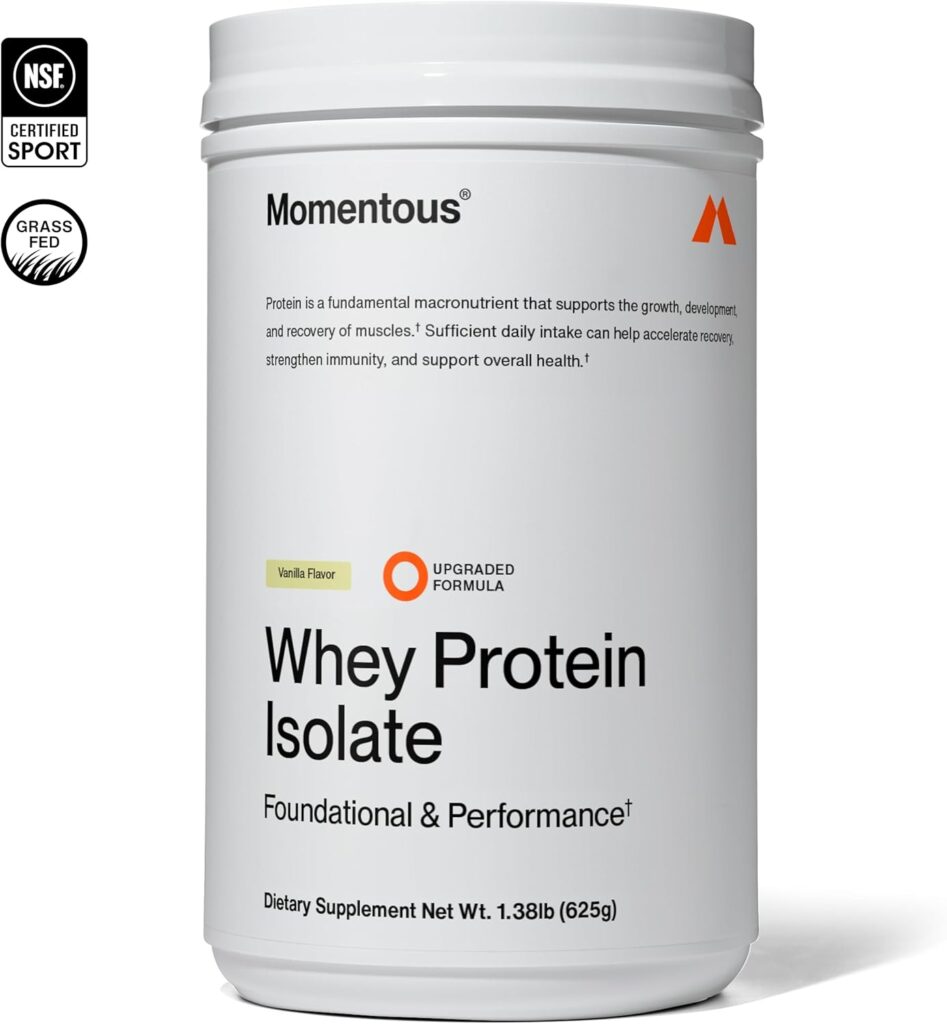
Protein per serving: 20g
Certification: NSF Certified for Sport + Informed Sport
Price per serving: ~$2.39
Type: Whey isolate
Momentous is the protein powder that professional sports teams actually use — and for good reason. It’s one of the few products on the market carrying both NSF Certified for Sport and Informed Sport certification simultaneously, meaning it’s been independently tested twice for banned substances and label accuracy. For competitive female athletes who face drug testing, this dual certification is the gold standard.
The formulation is clean: grass-fed whey isolate sourced from European dairy farms, naturally sweetened with stevia and monk fruit, no artificial flavours or gums, and added ProHydrolase — a blend of digestive enzymes that helps the body absorb protein faster and reduces the bloating that some women experience with standard whey. Available in eight flavours including Chocolate, Vanilla, Unflavored, and Spiced Chai.
What we like: Highest certification standard available, easy on sensitive stomachs, excellent mixability, no artificial sweeteners.
What to be aware of: At ~$2.39 per serving it’s the most expensive whey on this list. If budget is a priority, Thorne delivers similar certification at a lower price point.
Best for: Competitive athletes, women with sensitive digestion, anyone who wants the cleanest possible whey isolate.
💰 Best value NSF pick — Thorne Whey Protein Isolate
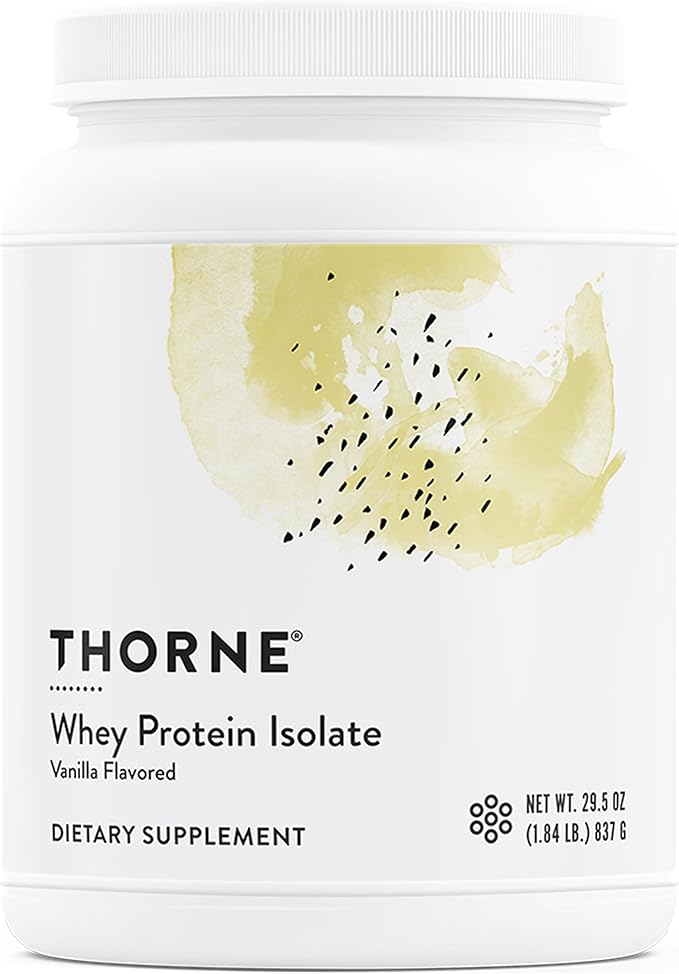
Protein per serving: 21g
Certification: NSF Certified for Sport
Price per serving: ~$2.00
Type: Whey isolate
Thorne is trusted by over 100 professional sports teams and has one of the strongest reputations in the supplement industry for quality control — every product goes through four rounds of in-house testing before release. The whey protein isolate is NSF Certified for Sport, delivers 21g of protein per serving, and contains 2.3g of leucine — the key amino acid that triggers muscle protein synthesis.
What sets Thorne apart from other isolates is the addition of digestive enzymes papain and bromelain, which assist protein breakdown and have been linked to reduced post-workout muscle soreness. Available in Chocolate and Vanilla, both naturally sweetened and free from artificial flavours.
What we like: NSF certified, digestive enzymes included, strong leucine content, better value than Momentous, trusted brand with rigorous in-house testing.
What to be aware of: Some reviewers find the texture slightly fine and dusty when scooping. Only two flavour options.
Best for: Female athletes who want NSF-level certification without the premium price tag, and anyone focused on muscle recovery and body composition.
🌿 Best with probiotics — Garden of Life Sport Grass-Fed Whey
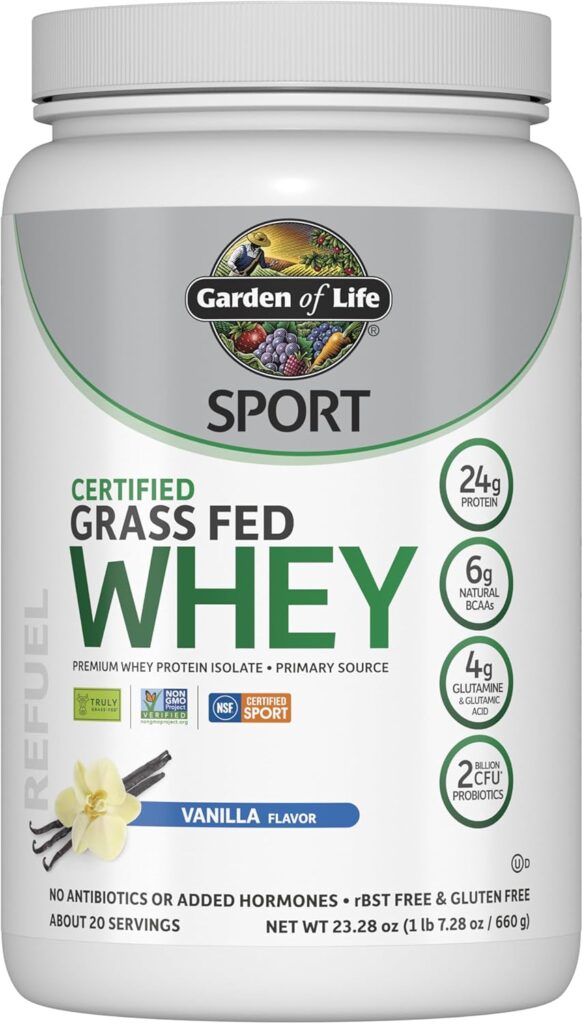
Protein per serving: 24g
Certification: NSF Certified for Sport + Informed Sport
Price per serving: ~$1.95
Type: Whey isolate + milk protein blend
Garden of Life Sport is a strong all-rounder — dual certified, grass-fed, cold-processed, and micro-filtered from Irish family farms. At 24g of protein per serving it delivers more protein per scoop than most isolates on this list, and it adds clinically studied probiotics to support immune and digestive health, which can be particularly useful for female athletes prone to gut issues during heavy training blocks.
One thing to note: unlike a pure isolate, this product contains milk protein in addition to whey isolate, which means it retains some lactose. If you’re sensitive to lactose, a pure isolate like Momentous or Thorne may suit you better.
What we like: Dual certified, high protein per serving, probiotics for gut health, ethical grass-fed sourcing, good value.
What to be aware of: Contains milk protein (not a pure isolate), sweeter taste than some alternatives, includes erythritol which can cause bloating in sensitive individuals.
Best for: Female athletes who want strong gut health support alongside their protein, and those who prioritise ethical, transparent sourcing.
🔬 Best ingredient transparency — Transparent Labs 100% Grass-Fed Whey Isolate
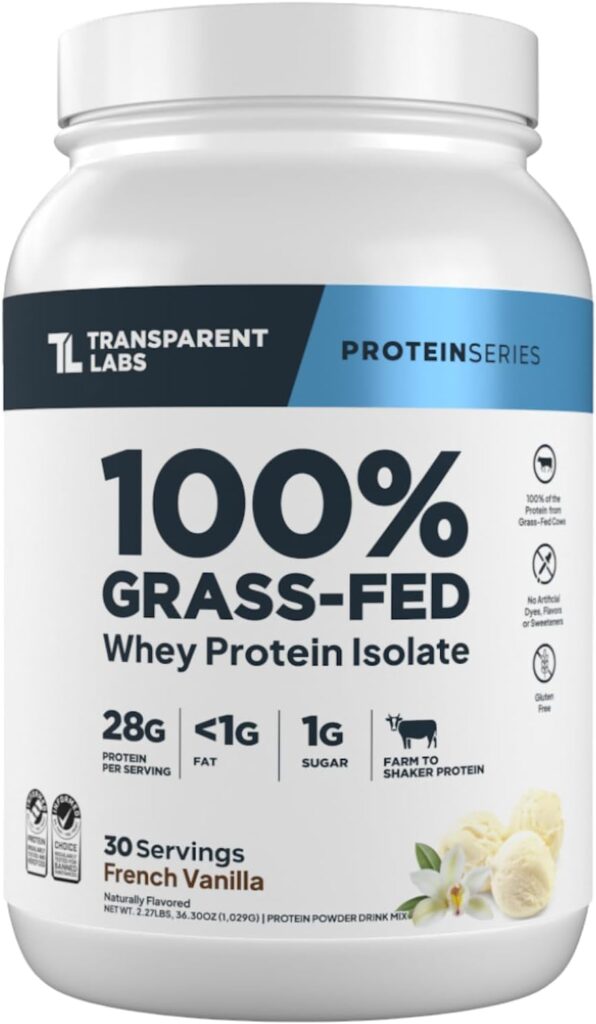
Protein per serving: 25g
Certification: Informed Choice
Price per serving: ~$1.99
Type: Whey isolate
Transparent Labs earns its name. There are no proprietary blends, no hidden ingredient amounts, and no artificial sweeteners, colours, or preservatives — just grass-fed whey isolate, natural flavours, and stevia. At 25g of protein per serving it has the highest protein content of the whey options on this list, and independent lab testing confirmed both purity and label accuracy across their product range.
With 14+ flavours — including options like Cinnamon French Toast and Mocha — it’s also the most varied lineup here, which matters for long-term consistency.
What we like: Highest protein per serving (25g), fully transparent label, no artificial ingredients, 14+ flavours, strong independent lab testing record.
What to be aware of: Informed Choice rather than NSF Certified for Sport — for most recreational and amateur athletes this makes no practical difference, but competitive athletes in leagues that specifically require NSF should note it.
Best for: Female athletes who want maximum protein per serving, ingredient transparency, and flavour variety.
🌱 Best plant-based — Ritual Essential Protein Daily Shake 18+
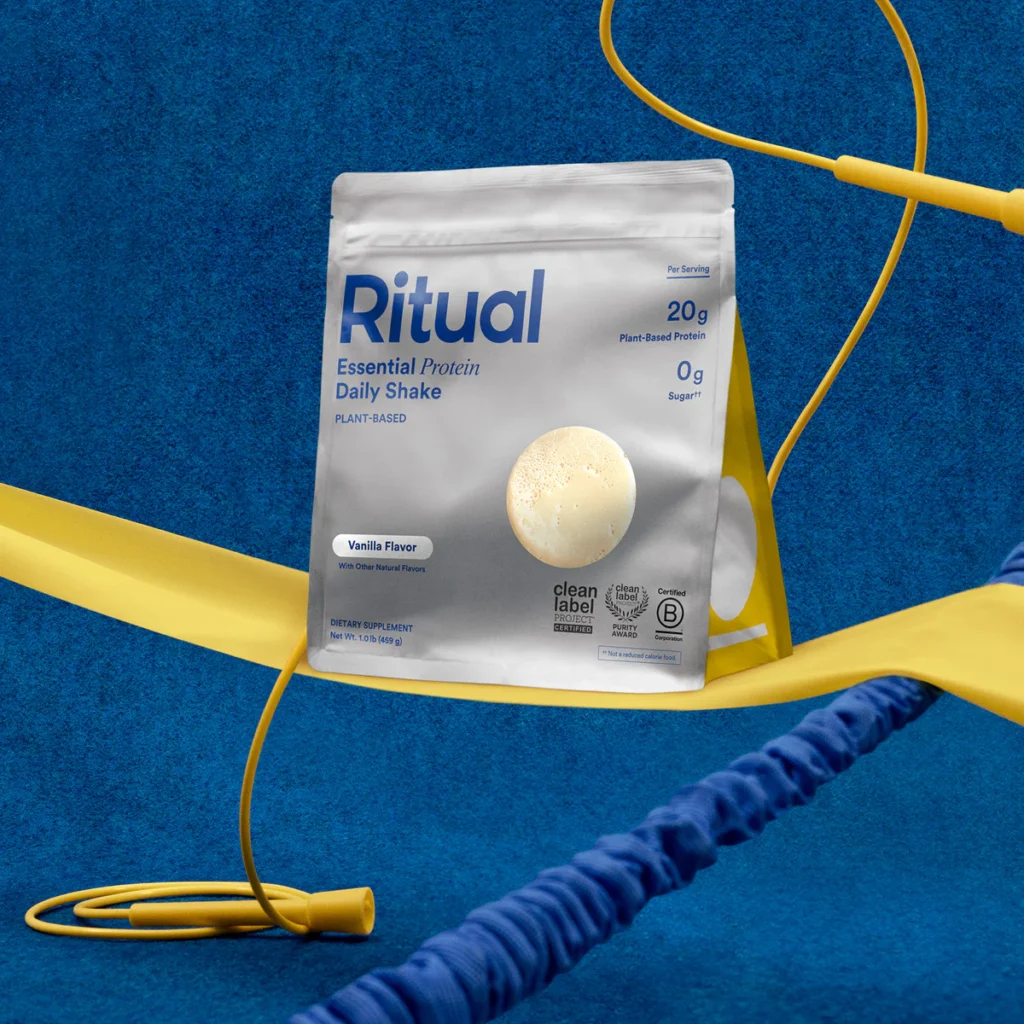
Protein per serving: 20g
Certification: Informed Sport + Clean Label Project Purity Award
Price per serving: ~$2.93
Type: Organic pea protein
Ritual’s Essential Protein addresses one of the biggest issues with plant-based protein head-on: completeness. Pea protein alone is low in the amino acid methionine, so Ritual adds L-Methionine directly to create a full essential amino acid profile — 8g of EAAs and 4g of BCAAs per serving.
What makes it stand out among plant proteins is the traceability: Ritual publishes the supplier, farm location, and heavy metal test results for every batch. It carries both Informed Sport certification and a Clean Label Project Purity Award — the most rigorous combination available for a plant protein. Available in Vanilla and Chocolate, sweetened with monk fruit and Reb-M, no stevia aftertaste.
What we like: Complete amino acid profile, double-certified, full supply chain transparency, heavy metal tested per batch, clean taste.
What to be aware of: Most expensive option at ~$2.93 per serving. Only 15 servings per bag on subscription.
Best for: Vegan or dairy-free female athletes who want the cleanest, most rigorously tested plant protein available.
[Check price on Ritual] (affiliate link — PENDING APPROVAL)
🏷️ Best budget plant-based — Naked Pea Premium Pea Protein
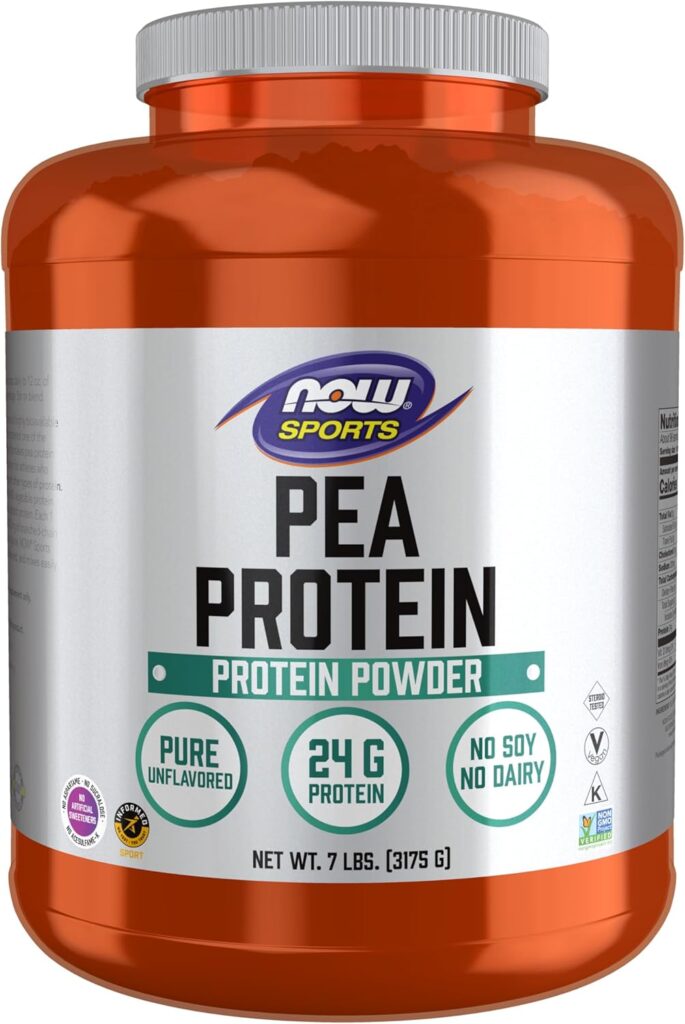
Protein per serving: 27g
Certification: Informed Choice
Price per serving: ~$1.00
Type: Yellow pea protein isolate
Naked Pea does one thing and does it well: one ingredient, yellow pea protein isolate, nothing else. No sweeteners, no flavours, no thickeners, no fillers. At 27g of protein per serving — the highest of any product on this list — and roughly $1.00 per serving, it offers exceptional value for a certified plant protein.
The trade-off is taste and completeness. Unflavored pea protein has a distinct earthy flavour that works well in smoothies or blended recipes but can be noticeable in water alone. And like all single-source pea proteins, it’s relatively low in methionine — if it’s your primary protein source, consider adding other amino acid sources through your diet.
What we like: Highest protein per serving (27g), single clean ingredient, Informed Choice certified, exceptional value, vegan and gluten-free.
What to be aware of: Strong pea flavour in water alone — best used in smoothies or recipes. Not a complete protein without dietary methionine from other sources.
Best for: Budget-conscious vegan athletes and anyone who uses protein powder primarily in smoothies or oatmeal.
How much protein do female athletes need per day?
🖼️ [VISUAL NOTE: Create a simple styled table graphic in Figma showing the training intensity vs protein ranges below — use brand colours. Place inline above or below the HTML table. Good candidate for a Pinterest pin too.]
Knowing which protein powder to buy is one thing. Knowing how much protein you actually need — and when to take it — is what makes the difference between a supplement that earns its place in your routine and one that sits half-used on a shelf.
Step 1: Calculate your baseline
The most research-backed range for active women is 1.4 to 2.0 grams of protein per kilogram of body weight per day, based on the ISSN position stand.⁵ Where you fall within that range depends on how hard and how often you train:
| Training type | Recommended daily protein |
|---|---|
| Light activity (1–2x/week) | 1.2–1.4g per kg |
| Moderate training (3–4x/week) | 1.4–1.6g per kg |
| High-intensity or endurance training | 1.6–1.8g per kg |
| Heavy resistance training or competition prep | 1.8–2.0g per kg |
| Cutting phase (caloric deficit) | Up to 2.2g per kg |
To find your number: multiply your body weight in kilograms by the relevant figure. For example, a 65kg woman doing moderate training 4 times a week should aim for roughly 91–104g of protein per day.
Don’t know your weight in kg? Divide your weight in pounds by 2.2.
Step 2: See what food alone gets you
Before reaching for a supplement, it’s worth knowing your baseline from whole food sources. A typical day of balanced eating might deliver 60–80g of protein — often 20–40g short of what an active woman needs on training days. That gap is exactly where protein powder earns its place.
Step 3: Does the post-workout window actually matter?
For years, athletes were told they had a narrow 30-minute “anabolic window” after training to consume protein. The science has since become more nuanced.
Current evidence suggests that total daily protein intake matters far more than precise timing. That said, consuming 20–25g of protein within 1–2 hours after resistance training does appear to support muscle protein synthesis — and for most people, a post-workout shake is the most convenient way to hit that number. For endurance athletes, research points to consuming protein alongside carbohydrates after long sessions to support both muscle repair and glycogen replenishment.³
Step 4: Spread it across the day
Rather than loading most of your protein into one or two meals, research consistently shows that distributing intake evenly across 3–4 meals or snacks optimises muscle protein synthesis throughout the day. Aim for 20–35g per eating occasion rather than 60g at dinner and very little the rest of the day.
A note on the menstrual cycle
Emerging research suggests protein needs may fluctuate slightly across the menstrual cycle. During the luteal phase (the two weeks before your period), studies show that whole-body protein catabolism and leucine oxidation may be elevated — meaning the body may be breaking down slightly more protein than usual.^A,B,C The mechanism appears to be progesterone-driven, as progesterone promotes protein catabolism while oestrogen tends to suppress it.
That said, the most recent and methodologically rigorous study (2024) found no significant difference in muscle protein synthesis from resistance exercise between cycle phases — so the picture is still evolving.^E
The practical takeaway: if you notice that recovery feels harder or muscle soreness lingers longer in the days before your period, modestly increasing protein intake during that window — an extra 10–15g per day — is a low-risk, research-informed strategy worth trying. Just don’t treat it as an established guideline.
Frequently asked questions
Is protein powder safe for women?
Yes — for most healthy women, protein powder is safe when used as directed. The key is choosing a product that has been independently tested by a third-party certification body such as NSF Certified for Sport, Informed Sport, or Informed Choice. Research consistently shows that protein intakes of up to 2.0g per kilogram of body weight per day are safe for healthy, active adults.⁵ Women with kidney disease, liver conditions, or other conditions that affect protein metabolism should consult a healthcare provider before supplementing.
Will protein powder make me gain weight?
Not on its own. Weight change comes down to total calorie intake relative to expenditure over time. Protein powder typically contains 100–150 calories per serving. Used as a replacement for higher-calorie snacks, or to hit a protein target without excess calories, it’s unlikely to cause unwanted weight gain. In fact, higher protein intake is consistently associated with better body composition outcomes in active women — more lean mass retained, and better fat loss during caloric deficits.⁴ Protein is the most satiating macronutrient, which can help manage appetite.
Can I take protein powder while pregnant or breastfeeding?
This is a question best answered by your midwife, OB, or registered dietitian, as individual needs vary significantly. In general, whole food protein sources are preferred during pregnancy because they come with additional nutrients your body needs. If you do choose to use a protein supplement, look for products that are third-party tested for heavy metals — a particularly important consideration during pregnancy.
What’s the difference between whey and plant protein for women?
Whey protein is derived from milk and is a complete protein — it contains all nine essential amino acids, absorbs quickly, and has a strong research base supporting its use for muscle recovery and growth. Plant proteins — typically from peas, rice, or hemp — are the right choice for vegans, those with dairy intolerances, or anyone who prefers plant-based nutrition. When amino acid profiles are matched, research suggests plant and whey proteins produce comparable results for muscle protein synthesis.
When is the best time to take protein powder?
The most important factor is hitting your total daily protein target — timing matters less than most people think. That said, consuming 20–25g of protein within 1–2 hours after training is a well-supported practice for muscle recovery.³ Outside of that, protein powder fits wherever it’s most useful in your day — morning oats, a mid-afternoon smoothie, or an evening snack to close a protein gap.
How much protein powder per day is too much?
For healthy women, research doesn’t show harm from protein intakes up to 2.2g per kilogram of body weight per day, even over extended periods.⁵ The concern about high protein intake damaging kidneys applies specifically to people with pre-existing kidney disease — for healthy individuals, this has not been supported by the evidence. As a practical guide: most active women will hit their needs with one to two servings per day alongside a balanced diet.
Is soy protein bad for women’s hormones?
No — this is one of the most persistent myths in the supplement world. Soy contains phytoestrogens, plant compounds that have a weak ability to bind to oestrogen receptors. However, their activity is significantly weaker than the body’s own oestrogen, and multiple reviews of the research have found no meaningful effect on hormone levels, reproductive health, or athletic performance in women consuming normal dietary amounts. The products on this list that are plant-based use pea protein rather than soy, so the question is largely moot here anyway.
The bottom line
Choosing the best protein powder for female athletes doesn’t need to be complicated — but it does need to be intentional.
For most female athletes, the priority is simple: hit your daily protein target through a combination of whole foods and, where needed, a clean, certified supplement. The products on this list all do that job well. If you’re just getting started, Thorne Whey Protein Isolate gives you NSF certification and solid nutrition at a fair price. If you train hard, have a sensitive stomach, or want the highest certification standard available, Momentous is worth the investment. And if you’re plant-based, Ritual Essential Protein is the most rigorously tested option on the market.
But the product matters less than the habit. One scoop after training, consistently, will do more for your recovery than the perfect formula taken occasionally.
Want to go deeper on female-specific sports nutrition? Here’s where to go next:
- Does creatine work for women? The research is more compelling than you might think. → [INTERNAL LINK PENDING — Article #2]
- How to supplement around your menstrual cycle. Nutrition strategies tailored to each phase. → [INTERNAL LINK PENDING — Article #5]
- What supplements do female endurance athletes actually need? A practical guide for runners, cyclists, and triathletes. → [INTERNAL LINK PENDING — Article #8]
This article was last reviewed in April 2026. We update our content regularly to reflect new research. If you spot something that needs updating, contact us.
References
- Bandegan A, et al. (2017). Indicator Amino Acid–Derived Estimate of Dietary Protein Requirement for Male Bodybuilders on a Nontraining Day Is Several-Fold Greater than the Current Recommended Dietary Allowance. Medicine & Science in Sports & Exercise. Read study
- Wooding DJ, et al. (2020). Protein Requirements of Pre-Menopausal Female Athletes: Systematic Literature Review. Nutrients. Read study
- Churchward-Venne TA, et al. (2023). Protein Requirements Are Increased in Endurance-Trained Athletes but Similar between Females and Males during Postexercise Recovery. Medicine & Science in Sports & Exercise. Read study
- Outlaw JJ, et al. (2018). Effects of High Versus Low Protein Intake on Body Composition in Aspiring Female Physique Athletes. International Journal of Sport Nutrition and Exercise Metabolism. Read study
- Jäger R, et al. (2017). International Society of Sports Nutrition Position Stand: Protein and Exercise. Journal of the International Society of Sports Nutrition. Read study
Menstrual cycle references:
A. Lamont LS, et al. (1987). Menstrual Cycle and Exercise Effects on Protein Catabolism. Medicine & Science in Sports & Exercise. Read study
B. Hamadeh MJ, et al. (1994). Increased Leucine Flux and Leucine Oxidation During the Luteal Phase of the Menstrual Cycle in Women. American Journal of Physiology. Read study
C. Devries MC, et al. (2010). The Effect of the Menstrual Cycle on Exercise Metabolism. Sports Medicine. Read study
D. Simintiras CA, et al. (2019). Menstrual Cycle Rhythmicity: Metabolic Patterns in Healthy Women. Scientific Reports. Read study
E. Dent JR, et al. (2024). Menstrual Cycle Phase Does Not Influence Muscle Protein Synthesis or Whole-Body Myofibrillar Proteolysis in Response to Resistance Exercise. Journal of Physiology. Read study