Magnesium for Female Athletes (2026): What It Does, Why You’re Probably Low, and Which Form to Take
Table of Contents
Magnesium for female athletes is one of the most underdiscussed topics in sports nutrition — and one of the most practically important. It’s required for every contraction your muscles make, every molecule of ATP your cells produce, and every time your nervous system fires. It also plays a direct role in sleep quality, cortisol regulation, and — particularly relevant for female athletes — how your body handles the hormonal swings of your menstrual cycle.
And yet, despite all of that, magnesium deficiency is one of the most chronically overlooked nutritional problems in sport.
Here’s the uncomfortable reality: even when female athletes eat well and train hard, they are at elevated risk of being low in magnesium. Exercise increases magnesium losses through sweat and urine. Women tend to consume less dietary magnesium than men simply due to lower total food intake. And the foods highest in magnesium — dark leafy greens, nuts, seeds, legumes, whole grains — are often the first things cut when athletes are restricting calories or eating for weight management.
An eight-year study of 192 British Athletics Olympic and Paralympic athletes found that 22% were clinically deficient in magnesium at some point during the study period — and deficiency was significantly more prevalent in female athletes than in their male counterparts.¹
This article covers what magnesium actually does in your body, why female athletes are at higher risk of running low, what the research says about supplementation, and which certified products are worth buying.
This article is for informational purposes only and does not constitute medical or nutritional advice. Always consult a registered dietitian or healthcare provider before starting any supplement regimen.
What magnesium does for female athletes?
Magnesium is the fourth most abundant mineral in the human body and a required cofactor for over 300 metabolic reactions.² That number is not marketing language — it means that hundreds of the chemical processes your body runs every second depend on magnesium being present in adequate amounts.
For athletes specifically, the most relevant functions include:
Energy production. Magnesium is essential for producing and using ATP — the molecule your cells use as fuel. Every time your muscles contract during training, ATP is broken down and regenerated, and magnesium is required at multiple steps in that cycle. A depleted magnesium status means your energy system is running at a disadvantage.²
Muscle contraction and relaxation. Magnesium regulates the calcium-magnesium balance that controls how muscle fibres activate and release. Too little magnesium and the balance tips toward excess calcium signalling — a state associated with muscle tightness, cramps, and difficulty recovering between efforts.²
Sleep quality. Magnesium regulates the GABA receptors in your brain that promote sleep onset and depth. It also helps lower evening cortisol levels. Both effects matter for athletes, because sleep is where the majority of muscle repair and hormonal recovery happens.⁴
Cortisol and stress response. Magnesium helps regulate the HPA axis — the system that controls your cortisol output in response to stress (both physical training stress and psychological stress). Low magnesium status is associated with a heightened cortisol response to exercise and slower recovery between sessions.²
Bone health. Magnesium is required for the proper metabolism of calcium and vitamin D. It also directly influences bone mineral density. A study of elite swimmers found that magnesium intake was below recommended levels and was the strongest dietary predictor of bone mineral density — even after accounting for calcium, vitamin D, and total energy intake.³
Electrolyte balance. Magnesium works alongside sodium, potassium, and calcium to maintain fluid balance and proper hydration — particularly important for endurance athletes who lose electrolytes through prolonged sweat.
Why female athletes are especially at risk of deficiency
This is the part that most supplement content skips entirely.
Magnesium deficiency in the general population is already common — estimates suggest that somewhere between 10% and 75% of people in Western countries consume less than the recommended daily amount, driven largely by the modern diet’s shift away from whole grains, legumes, and vegetables toward processed foods that have had magnesium stripped out.²
But female athletes face additional risk factors that stack on top of this baseline:
Exercise increases magnesium losses. Strenuous training increases magnesium excretion through both sweat and urine. Research suggests that physically active individuals may require 10–20% more magnesium than sedentary people simply to maintain the same status.⁵ A systematic review and meta-analysis confirmed this with hard data: despite eating more magnesium overall, athletes had significantly lower serum magnesium concentrations and significantly higher urinary magnesium excretion than untrained controls — demonstrating that exercise raises the body’s requirement beyond what diet alone typically compensates for.⁶
Female athletes eat less. The RDA for magnesium for women aged 19 and over is 310–320 mg/day.² Research suggests female athletes may need closer to 320–400 mg/day when training load is accounted for. Yet surveys of female athletes consistently find dietary magnesium intakes below even the standard RDA — particularly in sports with weight or aesthetic pressures such as gymnastics, running, cycling, and dance.⁵
Magnesium is lower in female athletes by blood testing. The eight-year British Athletics study mentioned above was specific about this: magnesium levels were significantly lower in female athletes compared to males, even within the same elite sport population. The same study found that athletes with lower magnesium levels had significantly higher rates of tendon pain and soft tissue injuries — a finding with direct relevance for training resilience.¹
The menstrual cycle creates additional demand. Magnesium levels fluctuate across the menstrual cycle. During the luteal phase — the two weeks before your period — magnesium tends to drop, while demand from the nervous system increases. This is the physiological backdrop behind many PMS symptoms. Women with PMS consistently show lower magnesium levels compared to those without symptoms, suggesting that the body’s ability to buffer the luteal hormonal shift is partly dependent on magnesium status.⁷
What the research actually shows — and where it falls short
Let’s be precise about what the evidence supports.
Performance: the “deficiency correction” effect
The honest summary of the performance research is this: magnesium supplementation consistently improves exercise performance in people who are magnesium-deficient. In people who already have adequate magnesium levels, the evidence for additional performance benefit is weak.
A 2024 systematic review on magnesium and muscle soreness confirmed that supplementation at around 400 mg/day reduced markers of muscle damage in athletes during competitive seasons.⁸ A review of 14 randomised controlled trials found that magnesium supplementation improved physical performance in older women with intakes below the RDA, but produced no significant benefit in those already meeting requirements.³
The implication for female athletes is practically significant: given how common inadequate intake is in this population, many women who “try magnesium and feel better” may simply be correcting a deficit they didn’t know they had — which is a legitimate and meaningful effect, even if it isn’t the dramatic ergogenic boost that supplement marketing implies.
Sleep and recovery
The sleep evidence is among the clearest for magnesium. One meta-analysis found that supplementation improved sleep efficiency with a 17% improvement noted in one trial, and significant reductions in sleep onset latency and nighttime awakenings.⁴ For athletes, where sleep quality directly determines recovery quality, this is not a trivial finding.
Magnesium glycinate specifically — the form most commonly recommended for sleep — works via its effect on GABA receptors and its ability to reduce evening cortisol. The glycine component has an independent calming effect on the nervous system, making this form the most researched for sleep and stress applications.
PMS symptoms and cycle resilience
This is one of the strongest and most underreported applications for female athletes specifically.
Women with PMS tend to have lower magnesium levels than women without PMS, and multiple clinical trials have found that supplementation reduces the severity of premenstrual symptoms.⁷ A 2024 randomised controlled trial tested magnesium at 150 mg and 300 mg doses against placebo in women with primary dysmenorrhea and found that both doses significantly reduced symptoms — including cramps, headache, back pain, irritability, and low mood — with the 300 mg dose outperforming.⁷ A 2017 literature review in Magnesium Research concluded that supplementation is an evidence-based approach for the prevention of dysmenorrhea, PMS, and menstrual migraine.⁷
The physiological mechanism is well-understood: during the luteal phase, progesterone falls, cortisol and inflammation tend to rise, and the nervous system becomes more sensitised to pain signals. Magnesium helps counteract this by supporting GABA activity, reducing inflammatory prostaglandins that drive menstrual pain, and buffering the cortisol spike. For female athletes, whose training quality is directly affected by severe PMS symptoms, this represents a meaningful and evidence-backed use case.
Bone health
For female athletes in endurance sports — particularly runners — bone stress injuries are a significant concern, and magnesium is a relevant player here. Its role in calcium metabolism and vitamin D activation means it is part of the bone health picture alongside the nutrients athletes typically focus on (calcium, vitamin D, protein). The swimmer study cited earlier found magnesium intake was the strongest single dietary predictor of bone mineral density.³ This is one area where ensuring adequate intake has clear long-term relevance beyond day-to-day performance.
The honest limitations
Most of the magnesium and athletic performance research was not conducted in female athletes specifically. Study populations are predominantly male, mixed, or elderly — which limits how confidently we can extrapolate findings. Female-specific magnesium research, while growing, remains relatively thin. The performance effects are most convincingly demonstrated in deficient populations, and without testing your own magnesium status, it is difficult to know which category you fall into.
Signs you might be low in magnesium
Magnesium deficiency doesn’t always announce itself clearly. Symptoms are non-specific and easy to dismiss, which is why it often goes undetected. Common signs to pay attention to:
- Persistent fatigue despite adequate sleep and nutrition
- Muscle cramps or twitching — particularly at night or after training
- Difficulty falling asleep or poor sleep quality
- Heightened anxiety or irritability
- Worsening PMS symptoms
- Low energy during training without obvious cause
- Frequent headaches, especially premenstrually
A note on blood testing: Standard serum magnesium tests are an imperfect measure of true magnesium status, because only about 1% of the body’s magnesium is in the blood. Red blood cell (RBC) magnesium testing is more accurate but not routinely offered. If you suspect deficiency, the most practical approach for most people is to ensure dietary adequacy first, and consider supplementation if symptoms persist.
What to look for when buying magnesium
1. Form matters — and it matters for your specific goal
Unlike creatine, where monohydrate is clearly the optimal form for all purposes, magnesium comes in many forms that have meaningfully different applications. The form determines how well it’s absorbed, how it behaves in the body, and what it’s best suited for.
The forms worth knowing about:
Magnesium glycinate (bisglycinate): The best all-round choice for most athletes. Highly bioavailable, gentle on the stomach, and uniquely suited for sleep support, stress reduction, and nervous system recovery due to the calming effect of the glycine component. The form most recommended for daily use and for PMS symptom management. NSF-certified options are available.
Magnesium malate: Magnesium bound with malic acid, which is naturally involved in the Krebs cycle (cellular energy production). Best choice if daytime energy and muscle recovery are the primary goals, and for athletes who find glycinate makes them too drowsy to take during the day. Gentler on digestion than citrate.
Magnesium citrate: Well-absorbed and effective, but has a mild laxative effect at higher doses due to drawing water into the intestines. The most commonly available form. Good for general use and for PMS symptom support, but start with a lower dose if your digestion is sensitive.
Forms to avoid: Magnesium oxide has poor bioavailability (absorption as low as 4%) and is mainly useful as a laxative. Many budget supplement blends use oxide to inflate the dose number on the label while delivering little actual magnesium to your tissues. Check that your supplement specifies a bioavailable form.
2. Third-party certification: non-negotiable for athletes
The supplement industry is unregulated. Products are not required to contain what their label says. The only reliable way to know what’s actually in your magnesium supplement is to choose one that has been independently tested and certified.
Two certifications are worth trusting:
- NSF Certified for Sport — tests for 290+ banned substances, verifies label accuracy. Recognised by USADA, the NFL, NBA, and Olympic organisations.
- Informed Sport — tests every batch for banned substances and contaminants. Widely respected across professional sport.
3. Check the elemental magnesium content
Supplement labels often list the total compound weight rather than the elemental magnesium content. For example, a product may list “500 mg magnesium glycinate” when the actual elemental magnesium delivered is only 50–70 mg. Always look for elemental magnesium per serving and ensure it’s meaningful relative to your daily target of 200–400 mg.
4. Less is more on the ingredients list
A quality magnesium supplement should contain magnesium in a named bioavailable form, a clean capsule or powder base, and nothing else you don’t recognise. No proprietary blends, no hidden oxide, no artificial fillers.
Quick comparison: best magnesium supplements for female athletes
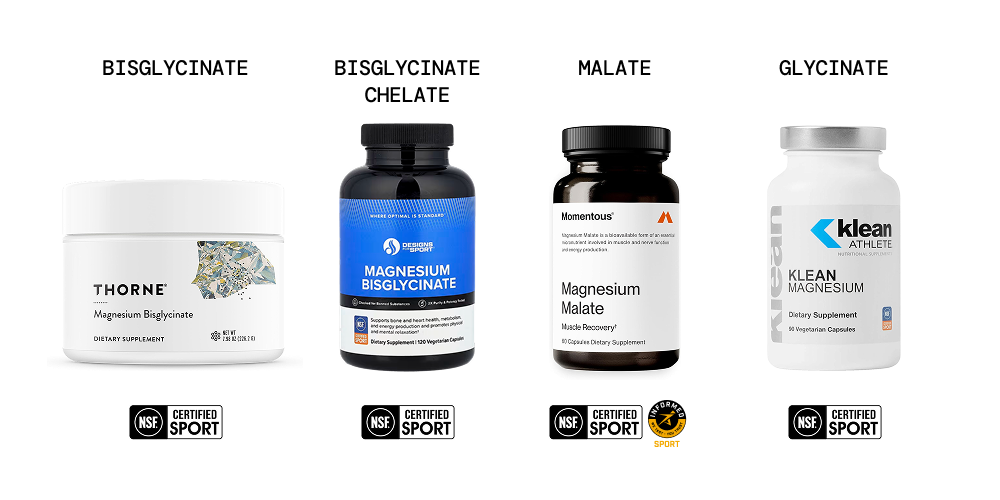
| Product | Form | Elemental Mg/serving | Certification | Best for | Price/serving |
|---|---|---|---|---|---|
| Thorne Magnesium Bisglycinate | Bisglycinate | 200 mg | NSF Certified for Sport | Best overall | ~$0.70 |
| Designs for Health Magnesium Bisglycinate | Bisglycinate chelate | 200 mg | NSF Certified for Sport | Best for sleep + recovery | ~$0.50 |
| Momentous Magnesium Malate | Malate | 220 mg | NSF + Informed Sport | Best for daytime energy | ~$0.83 |
| Klean Athlete Magnesium | Glycinate | 120 mg | NSF Certified for Sport | Best flexible dosing | ~$0.60 |
Our picks: best magnesium supplements for female athletes
Every product on this list carries independent third-party certification. Beyond certification, we looked at form, elemental magnesium content, ingredient quality, and value.
🥇 Best overall — Thorne Magnesium Bisglycinate
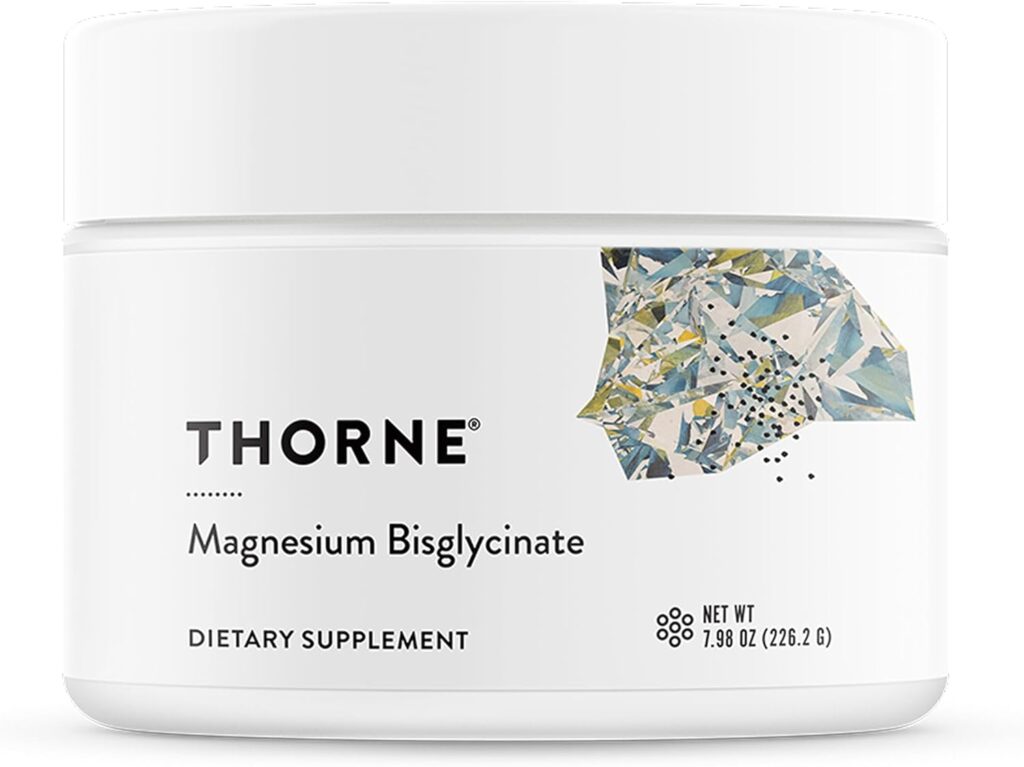
Dose per serving: 200 mg elemental magnesium
Certification: NSF Certified for Sport
Price per serving: ~$0.70
Form: Magnesium bisglycinate
Thorne is the default recommendation here, for the same reasons it earns the top slot on the creatine list: NSF Certified for Sport, clean single-ingredient formula, and a manufacturing quality standard trusted by professional sports organisations worldwide.
The form is magnesium bisglycinate — the chelated version of glycinate, meaning the magnesium is bound to two glycine molecules for enhanced stability and absorption. It’s the most bioavailable form available, the gentlest on the digestive system, and the best choice for sleep support, stress recovery, and PMS symptom management. At 200 mg elemental magnesium per serving, it delivers a meaningful dose without requiring multiple capsules.
Available as both a powder (unflavoured, mixes into water or a shake) and capsules. The powder format is worth considering — magnesium supplements require a fair volume of material per effective dose, and powder allows more flexible dosing.
What we like: NSF Certified for Sport, bisglycinate form for maximum absorption, 200 mg elemental magnesium per serving, powder and capsule options, trusted brand used by elite sports programmes.
What to be aware of: The bisglycinate form has a calming effect that works well for evening use — if you prefer to take your magnesium in the morning, malate (see below) may be a better fit for your routine.
Best for: Female athletes who want a reliable, certified, daily magnesium supplement — especially those dealing with sleep issues, PMS symptoms, post-training recovery, or general stress load.
🏆 Best for sleep + recovery — Designs for Health Magnesium Bisglycinate
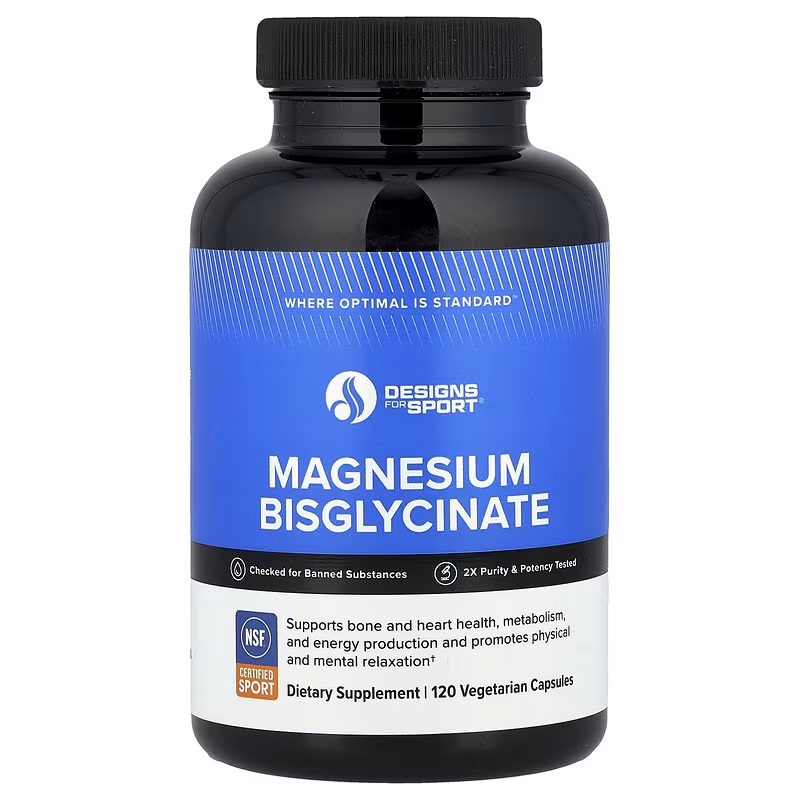
Dose per serving: 200 mg elemental magnesium
Certification: NSF Certified for Sport
Price per serving: ~$0.50
Form: Buffered magnesium bisglycinate chelate
Designs for Health is a professional-grade supplement brand that supplies primarily to healthcare practitioners, and their magnesium bisglycinate is one of the best-value NSF Certified for Sport options available. At approximately $0.50 per serving for 200 mg of elemental bisglycinate, it sits meaningfully below Thorne on price while maintaining the same certification standard.
The formula uses a buffered bisglycinate chelate — a form that combines the high absorption of bisglycinate with a small amount of magnesium oxide buffer for added stability. This is one of the most common approaches in pharmaceutical-grade magnesium formulations. The GMP-registered facility is audited twice annually by NSF International, and the product is free from common allergens.
What we like: NSF Certified for Sport, excellent value for a certified bisglycinate, professional-grade quality, allergen-free, vegan.
What to be aware of: Uses a buffered bisglycinate chelate that includes a small amount of magnesium oxide in the compound. The oxide proportion is small and does not significantly affect overall absorption, but it’s worth knowing if you’re comparing labels closely.
Best for: Athletes who want NSF-certified bisglycinate at a lower price point, and anyone specifically focused on optimising sleep quality and post-training nervous system recovery.
(add affiliate link)
💪 Best for daytime energy — Momentous Magnesium Malate
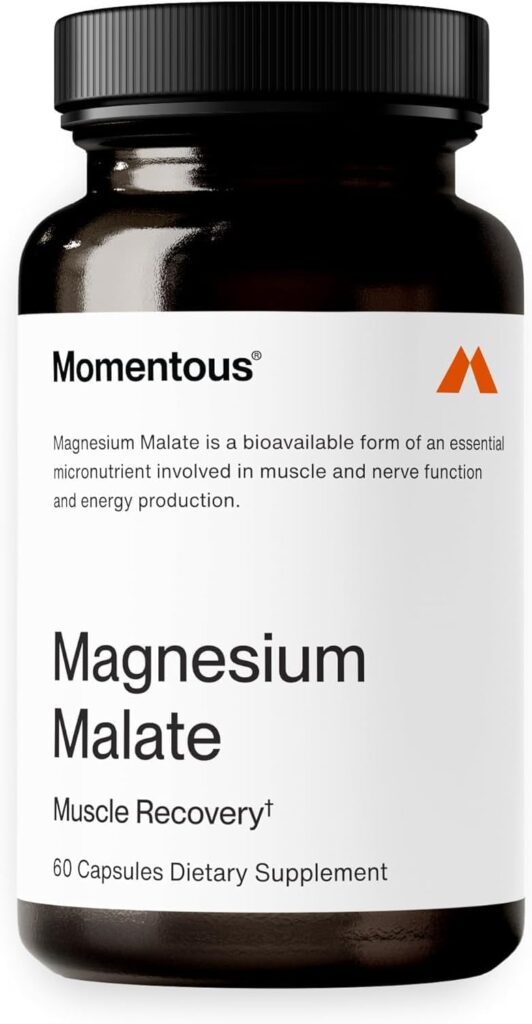
Dose per serving: 220 mg elemental magnesium
Certification: NSF Certified for Sport + Informed Sport
Price per serving: ~$0.83
Form: Magnesium malate
Momentous appears again — and for good reason. Their Magnesium Malate is the only product on this list certified by both NSF Certified for Sport and Informed Sport simultaneously, maintaining the dual-certification standard that makes Momentous the top recommendation for competitive athletes across their product range. [INTERNAL LINK — Best Protein Powder for Female Athletes]
The form here is magnesium malate rather than glycinate — a deliberate choice for daytime use. Malic acid is a compound naturally found in fruits and directly involved in the Krebs cycle (cellular energy production). The combination is commonly chosen by athletes who want magnesium support during the day without the sedating effect of glycinate, and it’s particularly popular among endurance athletes and those managing fatigue or chronic training load.
At 220 mg elemental magnesium per serving, it delivers a solid dose. The Momentous premium reflects the dual-certification overhead, not a performance advantage over the other forms — but for competitive athletes in drug-tested sports, it’s the safest option on this list.
What we like: Dual NSF + Informed Sport certification (highest standard available), malate form for daytime energy support, 220 mg elemental magnesium, trusted by professional and Olympic athletes.
What to be aware of: The most expensive option here. Malate form is well-suited for daytime/energy use but is a less direct choice than glycinate for sleep and PMS applications.
Best for: Competitive female athletes in drug-tested sports who want the highest certification standard, and endurance athletes looking for a daytime magnesium option to support energy and reduce training fatigue.
🏷️ Most flexible — Klean Athlete Magnesium Glycinate
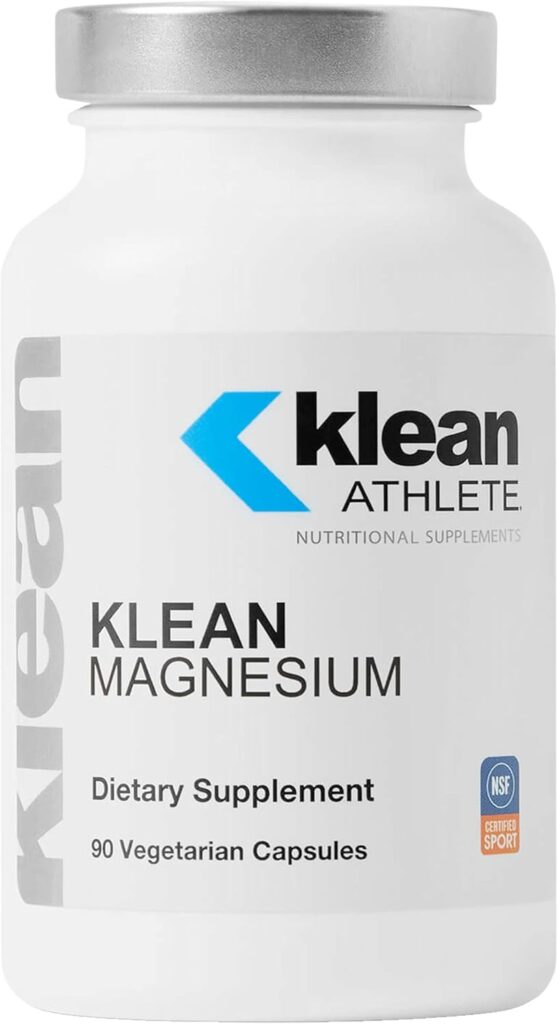
Dose per serving: 120 mg elemental magnesium (per capsule)
Certification: NSF Certified for Sport
Price per serving: ~$0.60
Form: Magnesium glycinate
Klean Athlete is a practitioner-trusted brand built specifically around NSF Certified for Sport products for active individuals. Their magnesium glycinate capsule delivers 120 mg of elemental magnesium per capsule with a recommended dose of 1–4 capsules daily — making it the most flexible dosing option on this list for athletes who want to adjust their intake based on training load, cycle phase, or recovery demands.
The capsule format and flexible dosing make this particularly well-suited for athletes who want to take a smaller amount on easy days and a larger amount before harder training blocks or during the luteal phase of their cycle when magnesium demand is higher. The formula is clean: magnesium glycinate, vegetarian capsule, and nothing else significant.
What we like: NSF Certified for Sport, most flexible dosing of any option on this list, clean glycinate formula, practitioner-trusted brand, good for building a personalised magnesium routine.
What to be aware of: Lower elemental magnesium per capsule (120 mg) means you need 2–3 capsules to reach an effective dose — which adds up on cost per day at higher doses. Not the cheapest per mg of elemental magnesium.
Best for: Athletes who want to vary their magnesium dose across their training week or menstrual cycle, and those who prefer to start low and increase gradually.
How to take magnesium: dosing guide for female athletes
How much do you need?
The standard RDA for magnesium for women aged 19 and above is 310–320 mg/day.² Athletes almost certainly need more — research suggests physically active women may require 320–400 mg/day to compensate for exercise-related losses through sweat and urine.⁵
As a practical target for female athletes supplementing to fill a dietary gap:
- 200–300 mg/day is a reasonable starting dose for most women who eat a moderately magnesium-rich diet and want to ensure they’re not running a deficit
- 300–400 mg/day is more appropriate for higher training loads, athletes with significant sweat losses, or those dealing with persistent symptoms of deficiency
Do not exceed 400 mg/day from supplements without guidance from a healthcare provider. The tolerable upper intake level for supplemental magnesium (i.e., from supplements, not food) is 350 mg/day for adults, above which GI side effects become more likely.²
Timing
For sleep and recovery: Take magnesium glycinate or bisglycinate 30–60 minutes before bed. The calming effect of the glycine component supports sleep onset, and the reduced cortisol effect aids overnight recovery.
For energy and daytime training support: Take magnesium malate in the morning or with your pre-training meal. Malate’s association with cellular energy pathways makes it the better daytime option.
For PMS symptom management: Consistent daily use throughout the cycle appears more effective than taking magnesium only premenstrually. Some practitioners suggest slightly higher doses during the luteal phase (the two weeks before your period), but the most important thing is not missing doses during this phase when demand is highest.⁷
Should you take magnesium with food?
Yes — taking magnesium with food improves absorption and reduces the risk of GI discomfort, particularly with citrate forms. Bisglycinate and malate are gentler on an empty stomach than citrate or oxide, but food is still generally recommended.
What about getting magnesium from food first?
Dietary sources should always be the foundation. Foods high in magnesium include: dark leafy greens (spinach provides approximately 157 mg per cooked cup), pumpkin seeds (~150 mg per ounce), almonds (~80 mg per ounce), black beans (~120 mg per cooked cup), and whole grains. If your diet regularly includes these foods, your supplemental needs will be lower. A typical Western diet without these foods can easily leave a female athlete 100–200 mg/day short of her requirement.
Frequently asked questions
Does magnesium help with PMS as a female athlete?
Yes — this is one of the better-supported applications for magnesium in women. Multiple clinical trials have found that supplementation reduces PMS symptoms including cramps, headaches, mood changes, and sleep disturbances.⁷ The mechanism is physiologically sound: magnesium supports GABA activity, helps regulate cortisol, and reduces the inflammatory prostaglandins that drive menstrual pain. Women with PMS consistently show lower magnesium levels than those without symptoms, suggesting a genuine connection between status and symptom severity.
Can magnesium improve sleep for athletes?
Yes, particularly in individuals with insufficient magnesium status. Magnesium regulates GABA receptors that promote sleep onset and depth, and helps lower evening cortisol — both of which directly affect sleep quality. Magnesium glycinate is the best-studied form for this application. For athletes in high training blocks where recovery is compromised, improving sleep quality is one of the most practically valuable effects magnesium can deliver.
Is magnesium safe to take daily?
Yes. Magnesium from food has no tolerable upper limit — you cannot consume too much from dietary sources. For supplemental magnesium, the tolerable upper intake level is 350 mg/day for adults, above which GI side effects (loose stools, cramping) may occur in some individuals. Bisglycinate and malate forms are gentler on digestion than citrate or oxide at equivalent doses. Long-term daily supplementation at appropriate doses is considered safe for healthy individuals.²
Can I take magnesium and creatine together?
Yes — there is no interaction between magnesium and creatine supplementation. Many athletes take both as part of their daily stack. See our full guide to creatine for female athletes for certified picks and dosing guidance.
What is the difference between magnesium glycinate and magnesium citrate?
Both are well-absorbed forms of magnesium. Glycinate (bound with the amino acid glycine) is the gentler option — best for sleep, stress, and nervous system recovery. Citrate (bound with citric acid) is slightly more affordable and equally effective for general magnesium repletion, but has a mild laxative effect at higher doses. For daily use as a female athlete, glycinate is typically the better choice unless you specifically want the digestive effect of citrate.
Does magnesium cause weight gain?
No. Magnesium does not cause fat gain or water retention in the way that creatine causes intramuscular water retention. There is no mechanism by which magnesium supplementation at normal doses causes meaningful scale weight changes.
Can I take magnesium while on hormonal contraceptives?
There is no evidence of harmful interactions between magnesium and hormonal contraceptives. Some research suggests oral contraceptives may actually slightly reduce magnesium levels — a further reason why female athletes on the pill may benefit from ensuring adequate intake. Consult your healthcare provider if you have specific concerns.
The bottom line
Magnesium is not a glamorous supplement. It doesn’t promise a dramatic performance edge or a visible physique change. What it does is keep a large number of essential physiological processes running properly — and for female athletes, whose training demands are high and whose dietary intake of magnesium is frequently below what their bodies need, getting this right matters.
The research is clear on a few things: exercise increases magnesium losses. Female athletes are more likely than males to be deficient. Deficiency is associated with impaired energy metabolism, reduced muscle function, poor sleep, heightened stress response, and worse PMS symptoms. Correcting it makes things work better — not dramatically better, but consistently better, which is what you want from a foundational supplement.
Thorne Magnesium Bisglycinate is the default recommendation: NSF certified, bisglycinate form, 200 mg elemental magnesium, and a brand whose quality standards are trusted at elite sport level. If you compete in a drug-tested sport and need dual certification, Momentous Magnesium Malate is the premium choice. If daytime energy is the priority, malate is worth trying over glycinate regardless of brand.
Start with 200–300 mg of elemental magnesium daily. Take bisglycinate at night, malate in the morning. Give it four to six weeks of consistent use. Most female athletes notice the difference — in sleep quality first, then in how they feel during the harder parts of their training cycle.
Want to build out the rest of your supplement foundation?
- The best protein powders for female athletes — certified picks, female-specific research, and how much you actually need.
- Creatine for female athletes — what the research actually shows, and why women may benefit more than the headlines suggest.
- How to supplement around your menstrual cycle — nutrition strategies tailored to each phase. → [INTERNAL LINK PENDING — Article #5]
This article was last reviewed in April 2026. We update our content regularly to reflect new research. If you spot something that needs updating, contact us.
References
- Pollock N, et al. (2020). An 8-year Analysis of Magnesium Status in Elite International Track & Field Athletes. International Journal of Sport Nutrition and Exercise Metabolism. Read study
- Nielsen FH, Lukaski HC. (2006). Update on the relationship between magnesium and exercise. Magnesium Research. 19(3):180–189. Read study
- Dominguez LJ, Veronese N, Barbagallo M, et al. (2025). The Importance of Vitamin D and Magnesium in Athletes. Nutrients. 17(10):1655. Read study
- Referenced via: multiple supplementation meta-analyses including Wang et al. (2017) on sleep quality outcomes. See Cadence Science Review. Reference
- Tarsitano MG, et al. (2024). Effects of magnesium supplementation on muscle soreness in different type of physical activities: a systematic review. Journal of Translational Medicine. 22:629. Read study
- Hua Y, et al. (2023). Lower serum magnesium concentration and higher 24-h urinary magnesium excretion despite higher dietary magnesium intake in athletes: a systematic review and meta-analysis. Journal of Trace Elements in Medicine and Biology. Read study
- Parazzini F, et al. (2017). Magnesium in the gynecological practice: a literature review. Magnesium Research. 30(1):1–7. Referenced via: Samphire Neuroscience review of magnesium and the menstrual cycle, including 2024 RCT data. Read overview
- Tarsitano MG, et al. (2024). ibid.