Creatine for Female Athletes (2026): Does It Actually Work?
Table of Contents
Creatine for female athletes is one of the most underexplored topics in sports nutrition — and one of the most promising. Decades of studies, thousands of participants, consistent results. And yet if you’re a woman who trains, you’ve probably been told one of three things: it’s for bodybuilders, it’ll make you look puffy, or the research doesn’t really apply to you.
Two of those three things are myths. One of them — the research part — is actually worth taking seriously, but not in the way you might think.
Here’s the truth: most creatine research has been conducted on men. Women have been dramatically underrepresented in sports science studies for decades — a 2021 review found that women made up only about one-third of exercise science study participants between 2014 and 2020, with just 6% of studies recruiting only females.⁴ So when someone says “the evidence on creatine for women is mixed,” what they really mean is: we haven’t studied women enough yet.
What the female-specific research does show is striking. Women have 70–80% lower endogenous creatine stores than men, which means supplementation may actually produce a proportionally larger effect in female athletes than in male ones.¹ And the emerging evidence goes well beyond strength — creatine shows promise for brain health, mood, hormonal resilience, and long-term bone density.
This article covers everything the research currently supports, what it doesn’t, how to take creatine as a female athlete, and which certified products are worth buying.
This article is for informational purposes only and does not constitute medical or nutritional advice. Always consult a registered dietitian or healthcare provider before starting any supplement regimen.
What is creatine and what does it actually do?
Creatine is a naturally occurring compound your body makes from three amino acids — arginine, glycine, and methionine — primarily in the liver and kidneys. It’s also found in red meat and seafood. A typical carnivorous diet delivers about 1–2g per day; vegans and vegetarians get virtually none from food.
Inside your muscles, creatine is stored as phosphocreatine (PCr). During short, explosive bursts of effort — a heavy lift, a sprint, a jump — your muscles burn through their primary energy currency (ATP) extremely fast. Phosphocreatine’s job is to rapidly regenerate ATP, allowing you to sustain high-intensity output for longer before fatigue sets in.
This is the core mechanism behind creatine’s performance benefit: more phosphocreatine in your muscles means more fuel available during high-intensity work, faster recovery between sets, and — over time — greater training adaptations.
What supplementation does is saturate your muscle creatine stores beyond what diet and endogenous synthesis alone can achieve. A typical loading protocol (4 × 5g daily for 5–7 days) or a slower maintenance approach (3–5g daily for 3–4 weeks) both get you to the same endpoint: fully topped-up phosphocreatine stores.
Why female athletes may need creatine more than they think
This is the part that rarely makes it into mainstream supplement content.
Women don’t just have lower creatine stores than men — the gap is significant. Research shows female athletes have 70–80% lower endogenous intramuscular creatine stores compared to males, even when matched for training status and diet.¹ This is partly because women consume less dietary creatine (since they typically eat less red meat) and partly due to differences in how sex hormones regulate creatine synthesis.
Estrogen and progesterone both influence creatine metabolism. Estrogen appears to support phosphocreatine resynthesis, while progesterone — which rises during the luteal phase — promotes protein and energy catabolism. The result is that creatine availability fluctuates across the menstrual cycle, and women may be operating with a depleted energy system at certain times of the month.¹
The practical implication: because women start from a lower baseline, supplementation may close a larger gap — and potentially produce more meaningful results — than in men who already have higher stores.
What the research actually shows — and where it falls short
Let’s be direct about what the evidence says, including the inconvenient parts.
The case for creatine in female athletes
Strength and power: Multiple studies and several narrative reviews support the effectiveness of creatine supplementation for improving muscular strength and power in female athletes. A 2021 lifespan review by Smith-Ryan and colleagues — the most comprehensive female-specific creatine review published to date — concluded that both short- and long-term creatine supplementation produces significant improvements in strength and exercise performance in women across a range of training levels.¹
Mood and cognition: This is one of the most compelling and underreported findings. The brain has high energy demands and relies heavily on the phosphocreatine system. Emerging evidence suggests creatine supplementation may improve cognitive function and mood, possibly by restoring brain energy homeostasis. Smith-Ryan et al. note that these benefits may be even more pronounced in women — particularly during periods of hormonal stress, sleep deprivation, or mood disruption — because female brains appear to have lower baseline creatine levels than male brains.¹
Menstrual cycle resilience: A small but intriguing body of research suggests creatine supplementation may reduce performance decrements during the luteal phase, when progesterone is highest and creatine availability is at its lowest. A 2025 narrative review in the Journal of the International Society of Sports Nutrition highlighted this as one of the most promising emerging applications for creatine in women.²
Post-menopause: When combined with resistance training, creatine supplementation has shown benefits for muscle mass, strength, and physical function in post-menopausal women — a population with high risk of sarcopenia (muscle loss) and osteoporosis.¹
The honest limitations
Not all the evidence points the same direction — and intellectual honesty matters here.
A January 2025 systematic review by Tully and colleagues — the most rigorous female-specific performance review to date — searched five databases and found that only 3 of 11 studies showed improvement in strength/power outcomes, 4 of 17 showed improvement in anaerobic outcomes, and just 1 of 5 showed improvement in aerobic performance compared to placebo.⁴ The authors’ conclusion was clear: most studies showed no improvement in performance compared to placebo.
But here’s the critical context: the same review found that the existing research is deeply flawed. Most studies were underpowered (too few participants), didn’t control for menstrual cycle phase, used inconsistent dosing protocols, and failed to account for the unique physiological characteristics of female athletes. The problem isn’t necessarily that creatine doesn’t work for women — it’s that we haven’t studied women well enough to know for certain.
This was reinforced by a 2024 meta-analysis (Wang et al.) that found creatine plus resistance training significantly improved strength in men, but showed no significant gains in women — while simultaneously noting that the female data consisted of only two studies with 40 total participants.⁵ That’s not enough data to draw firm conclusions either way.
The bottom line: the case for creatine in women is promising and scientifically plausible, but the evidence base is thin compared to what exists for men — and the honest answer is that more well-designed, female-specific research is needed.
Is creatine safe for women?
This is probably the most important question — and the answer is well-established.
A 2020 systematic review and meta-analysis by De Guingand and colleagues specifically examined adverse outcomes in females taking oral creatine monohydrate. They reviewed 656 studies, identified 58 female-only trials, and analysed 951 female participants. Their findings were unambiguous: no deaths, no serious adverse events, no significant weight gain, no kidney complications, no liver complications.³
Creatine is not a stimulant. It contains no hormones. It does not disrupt the endocrine system. It is not a steroid. These are common misconceptions with no basis in the evidence.
What about water retention? Creatine does cause your muscles to retain more water — this is actually part of the mechanism (phosphocreatine is stored with water). In practice, this typically amounts to 0.5–1.5kg of initial water weight. It is intramuscular, not subcutaneous — meaning it doesn’t cause bloating or puffiness under the skin. Most women don’t notice a meaningful scale change, and those who do find it resolves quickly if supplementation is stopped.
What about pregnancy? The current research does not support recommending creatine supplementation during pregnancy, primarily because adequate clinical trials have not been conducted in pregnant women. If you are pregnant or trying to conceive, speak with your healthcare provider before taking any supplement.
What to look for when buying creatine
1. Form: creatine monohydrate is the standard
Creatine monohydrate is the form used in the overwhelming majority of research. It is the most studied, most affordable, and most effective form available. Full stop.
You will see other forms marketed — creatine HCl, buffered creatine (Kre-Alkalyn), creatine ethyl ester, creatine citrate. None of these have demonstrated superiority over monohydrate in well-designed studies, and several (particularly creatine ethyl ester) have shown worse outcomes. Some are significantly more expensive. Unless you have a specific reason to avoid monohydrate (such as consistent GI issues, which are rare), there is no scientific justification for choosing anything else.
2. Third-party certification: non-negotiable for athletes
The supplement industry is unregulated. Manufacturers are not required to prove their products are safe, accurate, or free from contaminants before selling them. The only way to know what’s actually in your creatine is to buy a product that has been independently tested.
Two certifications are worth trusting:
- NSF Certified for Sport — tests for 290+ banned substances, verifies label accuracy. Recognised by USADA, recommended by the NFL, NBA, and Olympic organisations.
- Informed Sport — tests every batch for banned substances and contaminants. Widely respected in endurance and professional sport.
3. Ingredients: less is more
Quality creatine powder should have one ingredient: creatine monohydrate. No fillers, no proprietary blends, no added stimulants. Some products add carbohydrates to enhance uptake — this can marginally improve absorption but isn’t necessary for most athletes.
4. Micronised vs standard
Micronised creatine monohydrate has been processed into smaller particles, which improves mixability and is easier on the stomach. If you’ve tried standard creatine and found it gritty or uncomfortable, micronised is worth trying.
Quick comparison: best creatine supplements for female athletes
| Product | Form | Dose/serving | Certification | Best for | Price/serving |
|---|---|---|---|---|---|
| Thorne Creatine | Monohydrate (micronised) | 5g | NSF Certified for Sport | Best overall / best value | ~$0.50 |
| Momentous Creatine | Monohydrate (micronised) | 5g | NSF + Informed Sport | Best dual-certified | ~$0.83 |
| Transparent Labs Creatine HMB | Monohydrate + HMB | 5g creatine + 1.5g HMB | Informed Choice | Best for strength + body composition | ~$1.25 |
| Naked Creatine | Monohydrate | 5g | Informed Choice | Best budget | ~$0.30 |
Our picks: best creatine supplements for female athletes
Every product on this list carries independent third-party certification. Beyond certification, we looked at ingredient quality, form, mixability, and value.
🥇 Best overall — Thorne Creatine
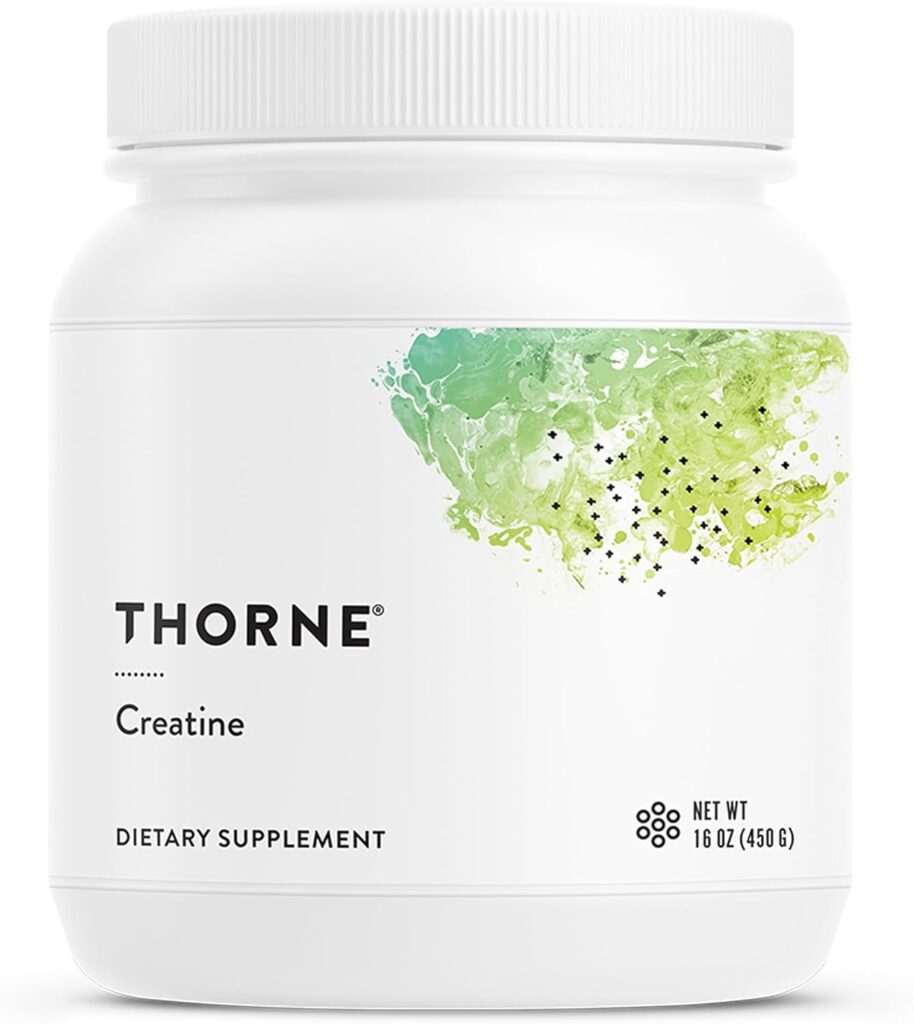
Dose per serving: 5g
Certification: NSF Certified for Sport
Price per serving: ~$0.50
Form: Micronised creatine monohydrate
Thorne is the straightforward answer for most female athletes. It’s NSF Certified for Sport — the most rigorous third-party certification available — it uses micronised creatine monohydrate (the form with the strongest evidence base), and at around $0.50 per serving it’s among the best-value certified options on the market.
The formula is exactly what it should be: one ingredient. No fillers, no proprietary blends, no additives. Thorne’s manufacturing quality is trusted by over 100 professional sports teams and the US Olympics Committee, and every batch goes through four rounds of in-house testing before release. Unflavoured and mixes cleanly into water, juice, or a protein shake.
What we like: NSF Certified for Sport, single clean ingredient, micronised for easy mixing, excellent value, trusted brand with elite-level quality control.
What to be aware of: Unflavoured only — if you strongly prefer a flavoured option, look at Transparent Labs. Comes in a larger tub which may feel like a commitment for first-time creatine users.
Best for: Female athletes of all levels who want a no-nonsense, certified creatine at a fair price. The default recommendation for most people.
🏆 Best dual-certified — Momentous Creatine
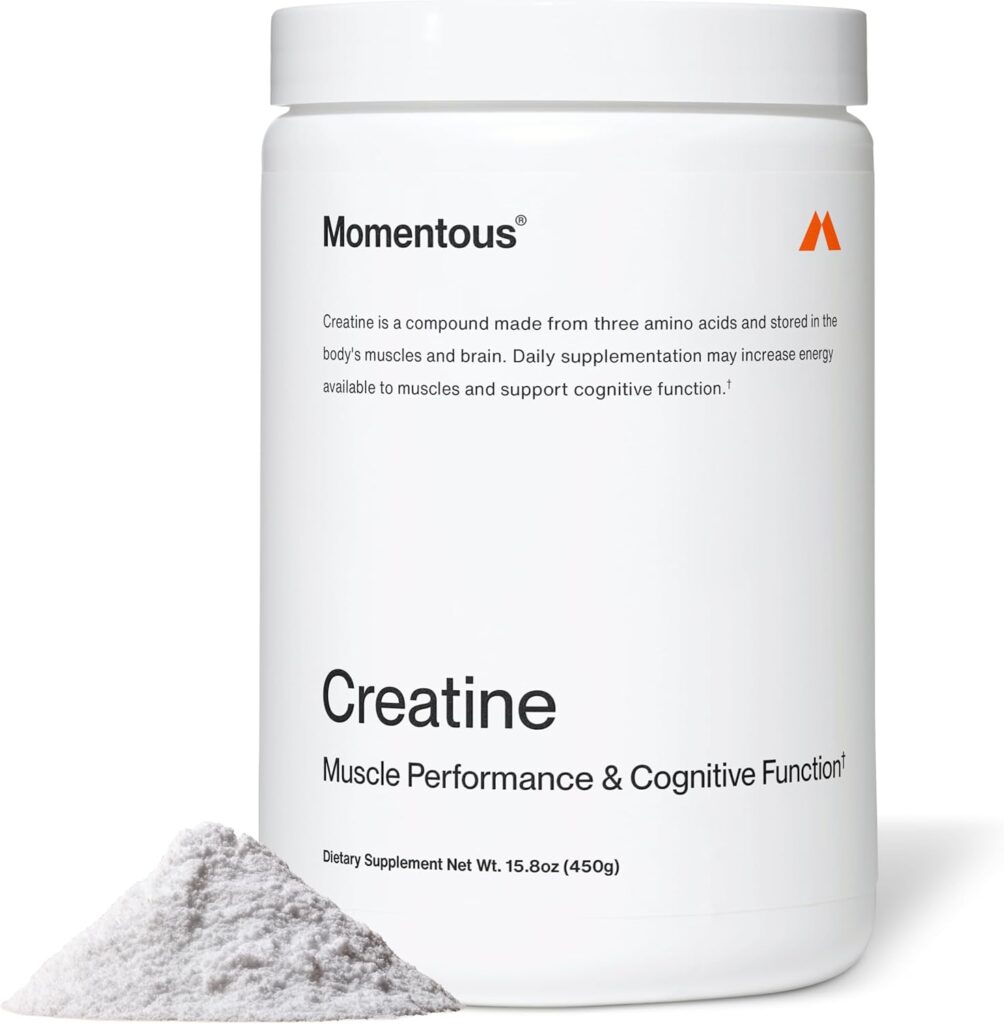
Dose per serving: 5g
Certification: NSF Certified for Sport + Informed Sport
Price per serving: ~$0.83
Form: Micronised creatine monohydrate
Momentous is the only creatine on this list certified by both NSF Certified for Sport and Informed Sport simultaneously — the same dual-certification standard that makes their protein powder the top pick for competitive athletes in our best protein powder guide for female athletes.
For female athletes subject to drug testing — whether at national, collegiate, or professional level — this dual certification is the highest safety standard available. Every batch is independently verified twice, for both banned substances and label accuracy. The formula is micronised creatine monohydrate, nothing else, and it mixes exceptionally cleanly.
At ~$0.83 per serving it’s noticeably more expensive than Thorne, and the performance in your muscles will be identical — the premium is entirely for the certification assurance. Whether that’s worth it depends on whether you compete in a tested sport.
What we like: Highest certification standard available (dual-certified), single clean ingredient, excellent mixability, trusted by professional and Olympic athletes.
What to be aware of: Significantly more expensive than Thorne for the same active ingredient. The price difference reflects certification overhead, not performance difference.
Best for: Competitive female athletes in drug-tested sports, and anyone who wants absolute certainty about what’s in their supplement.
💪 Best for strength + body composition — Transparent Labs Creatine HMB
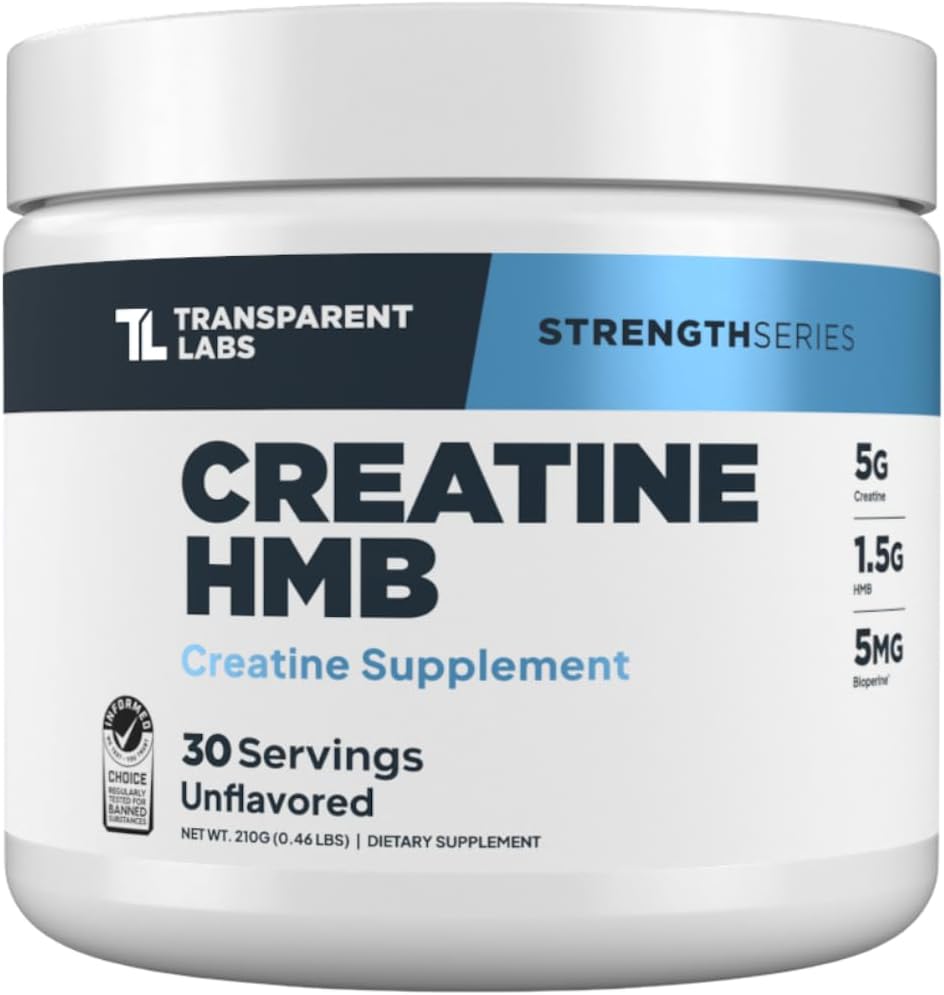
Dose per serving: 5g creatine + 1.5g HMB
Certification: Informed Choice
Price per serving: ~$1.25
Form: Creatine monohydrate + HMB (beta-hydroxy-beta-methylbutyrate)
This is the most targeted option on the list — and the most interesting for female athletes whose primary goal is body composition alongside performance.
HMB (beta-hydroxy-beta-methylbutyrate) is a metabolite of leucine — the amino acid that triggers muscle protein synthesis — and it has a reasonable body of evidence behind it for reducing muscle breakdown during high-intensity training and caloric deficits. The combination of creatine and HMB makes this product particularly suited to women who are training hard while managing their weight, or those in a caloric deficit who want to preserve lean muscle.
Transparent Labs lives up to its name: full ingredient disclosure, no proprietary blends, no artificial sweeteners, colours, or preservatives. Available in multiple flavours (Black Cherry, Tropical Punch, Unflavored, and others). Carries Informed Choice certification with independent batch testing.
What we like: Creatine + HMB combination is well-suited to body composition goals, full label transparency, no artificial ingredients, good flavour options, Informed Choice certified.
What to be aware of: HMB adds cost — at ~$1.25 per serving it’s the most expensive option here. The HMB evidence base, while promising, is less extensive than creatine’s. Not NSF Certified for Sport — competitive athletes in NSF-required leagues should choose Thorne or Momentous instead.
Best for: Female athletes focused on body composition — building or maintaining lean muscle while managing weight — who want a clean, well-formulated product with more than just creatine.
🏷️ Best budget — Naked Creatine
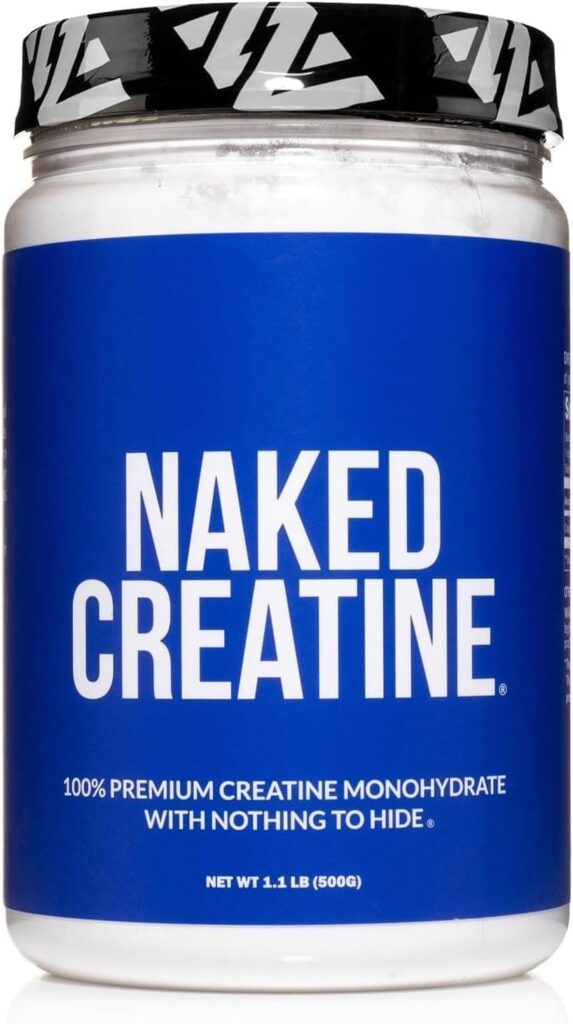
Dose per serving: 5g
Certification: Informed Choice
Price per serving: ~$0.30
Form: Creatine monohydrate
Naked Creatine is the budget answer that doesn’t compromise on what matters: one ingredient (creatine monohydrate), Informed Choice certification, and a price point that makes consistent daily use easy to sustain. At ~$0.30 per serving, it’s among the most affordable certified creatine products available.
Like their pea protein, Naked’s philosophy is radical simplicity — no sweeteners, no flavouring, no fillers. It mixes adequately in water (standard monohydrate, not micronised, so slightly grittier than Thorne or Momentous) and works identically in the body. If you’re new to creatine and want to try it without a significant financial commitment, this is the sensible starting point.
What we like: Exceptional value, single clean ingredient, Informed Choice certified, good for long-term consistent use without the cost adding up.
What to be aware of: Standard (not micronised) monohydrate — slightly grittier texture than the other picks. Informed Choice rather than NSF Certified for Sport. Unflavoured only.
Best for: Budget-conscious female athletes, beginners who want to try creatine without a big outlay, and anyone who already mixes their supplements into smoothies where texture doesn’t matter.
How to take creatine: dosing guide for female athletes
Creatine dosing is simpler than most supplement content makes it seem. Here’s what the evidence actually supports.
Option A — Maintenance dose (recommended for most women)
Take 3–5g of creatine monohydrate daily, every day, without a loading phase. This approach saturates your muscle creatine stores fully within 3–4 weeks and is equally effective as loading — it just takes slightly longer to reach peak stores. Most female athletes find this the most practical approach.
Option B — Loading protocol (faster saturation)
Take 20g per day divided into 4 × 5g doses for 5–7 days, then drop to 3–5g daily for maintenance. This saturates stores in about a week rather than 3–4 weeks. The trade-off: the higher initial dose is more likely to cause GI discomfort (bloating, stomach upset) in some individuals. There is no long-term performance advantage to loading vs maintenance — it purely affects the speed of initial saturation.
When to take it
The research does not support a meaningful “anabolic window” for creatine the way it’s often claimed. Total daily intake matters far more than precise timing. That said, some evidence suggests taking creatine close to training (before or after) may produce slightly better results than taking it at an unrelated time of day. The most practical guidance: take it at whatever time you’ll remember to take it consistently.
Should you cycle creatine?
No — there is no research supporting the practice of cycling creatine (taking it for 8 weeks, stopping for 4, then restarting). Your creatine stores simply deplete back to baseline when you stop supplementing. Continuous daily use is both safe and more effective for maintaining saturated stores.
Should you take more during the luteal phase?
This is an emerging area of research, not yet an established guideline. Some researchers have proposed that slightly higher creatine intake during the luteal phase — when progesterone is highest and creatine availability is lowest — may help offset performance decrements.¹ ² The practical suggestion from Smith-Ryan et al. is that ensuring consistent daily supplementation (rather than occasional use) is the most important factor for female athletes, since missing doses during hormonally demanding phases defeats the purpose.
A note for vegan and vegetarian athletes
If you follow a plant-based diet, you get essentially zero dietary creatine. Your baseline stores will be lower than those of meat-eaters, and you are likely to see a more significant response to supplementation. The maintenance dose (3–5g daily) applies equally, but you may notice larger initial performance improvements simply because you’re starting from a lower baseline.
For plant-based athletes, creatine is one of the supplements with the strongest evidence base — alongside vitamin B12 and, depending on your diet, omega-3s. This pairs well with the plant-based protein content covered in our best protein powder guide for female athletes.
Frequently asked questions
Does creatine cause weight gain in women?
Creatine causes your muscles to store more water — this is part of how it works. For most women, this amounts to 0.5–1.5kg of initial scale weight. Importantly, this is intramuscular water retention, not subcutaneous — it doesn’t cause visible bloating or puffiness under the skin. The comprehensive 2020 safety review by De Guingand et al. found no statistically significant weight gain in creatine-supplemented women compared to placebo across 29 studies.³ Over time, any scale increase from water is typically offset or exceeded by improvements in lean mass from training.
Will creatine make women look bulky or masculine?
No. Creatine supports the energy system your muscles use during training — it does not directly build muscle tissue or alter hormones. Building significant muscle mass requires years of progressive resistance training and a sustained caloric surplus. Creatine can help you train harder and recover better, which improves your fitness outcomes. What those outcomes look like depends entirely on how you train.
Is creatine safe for women long-term?
Yes, based on the available evidence. The 2020 systematic review by De Guingand et al. found no deaths, serious adverse events, kidney complications, or liver complications in female participants across 656 studies.³ Creatine has been studied for over 30 years in both performance and clinical contexts. The International Society of Sports Nutrition considers creatine monohydrate the most effective ergogenic nutritional supplement available and has stated that it is safe for healthy populations.
Can women take creatine while on hormonal birth control?
There is no research indicating that creatine interacts negatively with hormonal contraceptives. If you have concerns specific to your health situation, speak with your GP or a registered dietitian.
Does creatine affect the menstrual cycle?
Creatine does not contain hormones and does not appear to disrupt the menstrual cycle. If anything, the emerging research suggests it may help buffer the performance and energy fluctuations that occur across the cycle, particularly during the luteal phase.¹ ²
How long does creatine take to work?
With a loading protocol, you’ll reach saturated muscle stores within about a week. With a maintenance dose of 3–5g daily, full saturation takes 3–4 weeks. Most women notice improvements in training quality (more reps, shorter recovery between sets, less fatigue during high-intensity work) within 2–4 weeks of consistent supplementation.
Can I take creatine and protein powder together?
Yes — there is no interaction between creatine and protein powder, and combining them is extremely common. Many athletes simply add their creatine scoop to their post-workout protein shake. See our guide to the best protein powders for female athletes for our top certified picks.
The bottom line
Creatine is not a supplement that works exclusively for men. The physiology is the same — and the case for female athletes may actually be stronger, given that women start from significantly lower baseline stores.
The honest caveat is that the evidence base is thinner for women than for men, largely because women have been systematically underrepresented in sports science research. What exists is promising. What’s missing is the volume of well-designed, female-specific trials needed to draw definitive conclusions.
For most female athletes, the risk-benefit calculation is clear: creatine monohydrate is safe, well-studied, inexpensive, and has a meaningful upside for strength, recovery, and potentially cognitive and hormonal resilience. Thorne Creatine is the default recommendation — NSF certified, single ingredient, reliable, and affordable. If you compete in a tested sport and need the highest certification standard, Momentous is worth the premium.
Start with 3–5g daily, take it consistently, and give it 3–4 weeks. If you train hard, it’s likely to earn its place in your routine.
Want to go deeper on female-specific sports nutrition?
- The best protein powders for female athletes — certified picks, female-specific research, and how much you actually need.
- How to supplement around your menstrual cycle — nutrition strategies tailored to each phase. → [INTERNAL LINK PENDING — Article #5]
- What supplements do female endurance athletes actually need? — a practical guide for runners, cyclists, and triathletes. → [INTERNAL LINK PENDING — Article #8]
This article was last reviewed in April 2026. We update our content regularly to reflect new research. If you spot something that needs updating, contact us.
References
- Smith-Ryan AE, Cabre HE, Eckerson JM, et al. (2021). Creatine Supplementation in Women’s Health: A Lifespan Perspective. Nutrients. 13(3):877. Read study
- Elleryd Hudson SJ, et al. (2025). Creatine in Women’s Health: Bridging the Gap from Menstruation Through Pregnancy to Menopause. Journal of the International Society of Sports Nutrition. Read study
- De Guingand DL, Palmer KR, Snow RJ, et al. (2020). Risk of Adverse Outcomes in Females Taking Oral Creatine Monohydrate: A Systematic Review and Meta-Analysis. Nutrients. 12(6):1780. Read study
- Tully MA, et al. (2025). Does Creatine Supplementation Enhance Performance in Active Females? A Systematic Review. Nutrients. 17(2):238. Read study
- Wang Z, Qiu B, Li R, et al. (2024). Effects of Creatine Supplementation and Resistance Training on Muscle Strength Gains in Adults <50 Years of Age: A Systematic Review and Meta-Analysis. Nutrients. 16(21):3665. Read study